
What Is Pre-Ticketing in Apparel Logistics? (August 2026)

Faith Artieda • August 19, 2026

Pre-ticketing in apparel logistics is the process of applying required labels, tags, or tickets to merchandise before it is shipped to a retailer or distribution center. For apparel brands, pre-ticketing helps products arrive retail-ready while supporting each retailer’s specific labeling and compliance requirements.


A third-party logistics (3PL) provider can incorporate pre-ticketing into the fulfillment process, helping apparel brands efficiently prepare inventory for different retail partners.


Key Takeaways
  • Pre-ticketing prepares apparel inventory to meet retailer-specific requirements before shipment.
  • Requirements can vary depending on the retailer or order.
  • A 3PL can combine pre-ticketing with labeling, order fulfillment, palletization, and other value-added services.
  • Accurate pre-ticketing supports retail compliance and efficient distribution.


Why Is Pre-Ticketing Important for Apparel Brands?

Apparel brands often sell through multiple retailers, and those retailers may have specific requirements for how merchandise must be prepared before arriving at their facilities.


Pre-ticketing allows these requirements to become part of the warehouse fulfillment process rather than requiring additional preparation later in the supply chain.


This is particularly valuable for brands managing a combination of ecommerce, wholesale, and retail orders from the same inventory.


What Does Pre-Ticketing Include?

The exact process depends on the requirements of the retailer and apparel brand.


Pre-ticketing can involve preparing merchandise with the required tickets or labels before an order leaves the fulfillment center. It can also operate alongside other value-added services such as labeling, label placement, palletization, and order preparation.


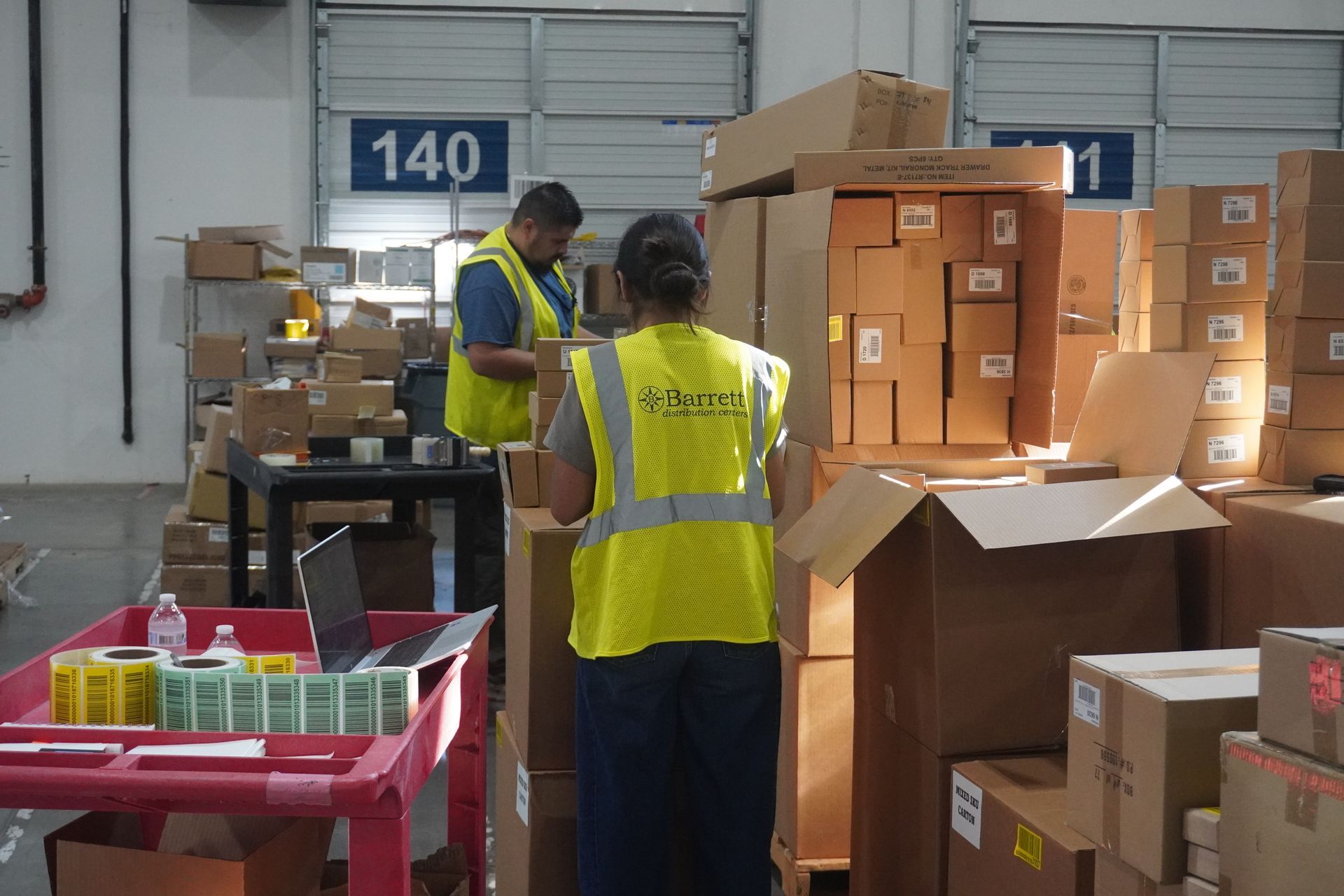
Barrett's apparel fulfillment capabilities include pre-ticketing as part of a broader set of value-added and retail fulfillment services. Barrett also supports labeling and UCC128, SCC18, and SCC14 requirements as part of its omnichannel operations.


How Does Pre-Ticketing Support Retail Compliance?

Retail compliance means preparing and shipping an order according to a retailer's specific requirements.


For apparel brands, fulfilling the order is only part of the process. Merchandise may also need to follow requirements related to labeling, ticketing, routing, palletization, or other preparation before reaching the retailer.


Integrating pre-ticketing into fulfillment helps create a more consistent process for preparing orders according to those requirements.


How Does Pre-Ticketing Work in a 3PL Warehouse?

Pre-ticketing can be incorporated into the order fulfillment workflow based on the requirements associated with a particular customer or retail order.


When an order requires additional preparation, the warehouse can complete the necessary value-added services before the merchandise is shipped.


This allows apparel brands to manage fulfillment and retail preparation within the same logistics operation rather than coordinating those activities separately.


Can a 3PL Handle Different Retailer Requirements?

An experienced omnichannel 3PL can support different requirements across multiple retail partners.


This is important because an apparel brand may be fulfilling orders for several retailers while also shipping directly to consumers. Each channel can have different operational requirements.


Barrett supports B2B and B2C omnichannel fulfillment and identifies retail vendor compliance, ASN management, labeling, pre-ticketing, order fulfillment, and other value-added services as part of its retail distribution capabilities.


Why Is Pre-Ticketing Important for Omnichannel Fulfillment?

Apparel brands increasingly serve customers through multiple channels, including ecommerce, marketplaces, wholesale accounts, and major retailers.


That means the same inventory may ultimately need to be prepared differently depending on where an order is going.

A flexible fulfillment operation can route inventory through the appropriate processes for each channel. For a direct-to-consumer order, that may mean pick-and-pack fulfillment. For a retail order, additional labeling, pre-ticketing, palletization, or compliance requirements may need to be completed before shipment.


This flexibility allows apparel brands to support multiple sales channels through a coordinated fulfillment strategy.


What Should Apparel Brands Look for in a Pre-Ticketing 3PL?

Apparel brands should look beyond whether a 3PL simply offers labeling services. The provider should understand the broader operational requirements involved in serving retail and ecommerce channels.


Experience with apparel fulfillment, retail compliance, inventory control, value-added services, and omnichannel distribution can help create a more seamless process as a brand adds retailers or expands into new sales channels.


Technology and communication are also important. A strong 3PL relationship should provide visibility into inventory and orders while maintaining clear processes for managing customer-specific requirements.


Frequently Asked Questions

What does pre-ticketing mean in apparel?

Pre-ticketing means applying required tickets or labels to apparel merchandise before it is shipped to a retailer or distribution center.


Why do retailers require pre-ticketing?

Retailers may establish specific merchandise preparation requirements to support their receiving and distribution processes. Pre-ticketing helps apparel brands prepare products according to those requirements before shipment.


Is pre-ticketing a value-added service?

Yes. Pre-ticketing can be provided as a value-added warehouse service alongside labeling, palletization, order fulfillment, and other retail preparation activities.


Can a 3PL handle pre-ticketing?

Yes. A 3PL with apparel and retail fulfillment capabilities can incorporate pre-ticketing into the warehouse workflow based on applicable customer and retailer requirements.


Is pre-ticketing only used for retail orders?

Pre-ticketing is particularly relevant to retail distribution because retailers can have specific merchandise preparation requirements. Apparel brands operating across multiple channels may use different fulfillment processes depending on whether an order is going to a retailer, distributor, marketplace, or individual consumer.

Recent Blog Posts
By Faith Artieda August 20, 2026
For many businesses, warehouse space is never a concern—until it suddenly is. Whether it's preparing for peak season, managing a surge in customer demand, or receiving an unexpected shipment from a supplier, running out of warehouse capacity can create operational challenges that impact every part of the supply chain. Rather than scrambling to make room or delaying inventory deliveries, many companies turn to overflow warehousing. This flexible storage solution helps businesses manage fluctuations in inventory without the expense of expanding or leasing a permanent facility. Understanding how overflow warehousing works and when to use it can help businesses maintain efficient operations while continuing to meet customer expectations. What Is Overflow Warehousing? Overflow warehousing is the temporary storage of excess inventory at an off-site warehouse when your primary facility reaches capacity. Instead of overcrowding your existing warehouse or slowing down operations, inventory is stored at a secondary location until it's needed. These facilities are often operated by third-party logistics providers, giving businesses access to additional warehouse space without the long-term commitment of building or leasing another distribution center. Overflow warehousing is designed to provide flexibility. Whether you need extra storage for a few weeks or several months, it allows your business to adapt to changing inventory levels without disrupting daily operations. Why Businesses Use Overflow Warehousing Inventory levels don't stay the same throughout the year. Seasonal demand, promotional events, supplier schedules, and business growth can all create temporary spikes that exceed available warehouse space. Retailers often increase inventory well before the holiday shopping season to ensure products are available when demand rises. Manufacturers may receive large production runs that need to be stored before distribution. Importers frequently experience inventory surges when overseas shipments arrive all at once. Without additional storage, these situations can lead to crowded aisles, inefficient picking paths, delayed receiving, and reduced productivity throughout the warehouse. Overflow warehousing provides businesses with the flexibility to absorb these temporary increases while keeping their primary operations organized and efficient. Signs You May Need Overflow Storage Many businesses don't realize they've outgrown their warehouse until operational issues begin affecting customer service. If warehouse aisles are becoming congested, inventory is being stored in temporary locations, or employees are spending more time moving products than fulfilling orders, it may be time to consider overflow warehousing. Other indicators include preparing for peak season, launching new products, increasing safety stock, onboarding new customers, or experiencing rapid business growth. When warehouse utilization consistently approaches capacity, even small increases in inventory can create significant operational bottlenecks. Securing overflow storage before space becomes critical helps avoid unnecessary disruptions. The Benefits of Overflow Warehousing One of the biggest advantages of overflow warehousing is flexibility. Businesses can quickly increase storage capacity without investing in additional buildings, equipment, or permanent labor. Overflow facilities also help improve warehouse efficiency. By relocating slower-moving or reserve inventory to a secondary location, the primary warehouse can focus on faster-moving products and daily order fulfillment. This often results in improved organization, faster picking times, and fewer errors during receiving and shipping. Another important benefit is cost control. Expanding or purchasing warehouse space requires significant capital investment and long-term planning. Overflow warehousing allows businesses to pay only for the storage space they need, making it a more cost-effective solution for temporary inventory increases. Working with a third-party logistics provider can also provide access to experienced warehouse teams, inventory management technology, and transportation services, helping businesses scale operations without adding internal resources. Overflow Warehousing During Peak Season Peak season is one of the most common reasons businesses utilize overflow warehousing. As inventory levels increase in preparation for holiday sales and seasonal demand, warehouse capacity can disappear quickly. Bringing inventory into storage early helps ensure products are available when customers begin placing orders, but it also requires additional space. Overflow warehousing gives businesses the ability to stage inventory ahead of peak season while keeping their primary fulfillment operations running efficiently. Rather than overcrowding picking areas or limiting receiving capacity, inventory can be strategically stored and replenished as demand increases throughout the season. This approach helps improve productivity while reducing the risk of shipping delays during the busiest months of the year. Choosing the Right Overflow Warehousing Partner Not all overflow storage solutions are the same. Businesses should look for a logistics partner that offers more than just available warehouse space. Inventory visibility is critical. A reliable warehouse management system should allow businesses to track inventory accurately across multiple locations and provide real-time updates when products are received, stored, or shipped. Location also matters. Choosing an overflow warehouse near manufacturing facilities, ports, transportation hubs, or your primary distribution center can reduce transportation costs and improve delivery times. Operational experience is equally important. A warehouse partner should have established processes for receiving, storing, managing, and distributing inventory while maintaining high standards for accuracy and service. Many companies choose to work with a 3PL because they can provide integrated warehousing, transportation, and fulfillment services under one provider, creating a more streamlined supply chain. Is Overflow Warehousing Right for Your Business? Overflow warehousing isn't only for large retailers or global manufacturers. Businesses of all sizes can benefit from additional warehouse capacity when inventory levels temporarily exceed available space. If your company experiences seasonal demand, rapid growth, supplier fluctuations, or large inventory purchases, overflow warehousing can provide the flexibility needed to maintain efficient operations without committing to permanent expansion. By planning ahead and securing additional storage before capacity becomes an issue, businesses can reduce operational disruptions, improve warehouse productivity, and continue delivering the reliable service customers expect. Preparing for Growth with Flexible Warehousing Today's supply chains require businesses to be more adaptable than ever. Customer demand can change quickly, inventory needs fluctuate, and warehouse space is a valuable resource that should be used efficiently. Overflow warehousing provides a practical solution for companies that need additional capacity without the cost and complexity of expanding their facilities. Whether you're preparing for peak season, managing unexpected inventory increases, or planning for future growth, having access to flexible warehouse space allows your business to respond with confidence. When integrated into a broader logistics strategy, overflow warehousing becomes more than just extra storage—it becomes a tool for improving efficiency, protecting customer service, and supporting long-term business growth.
By Faith Artieda August 19, 2026
As peak shipping season approaches, one thing becomes increasingly clear: freight markets don't stay static for long. Rising demand can affect everything from transportation costs and carrier availability to inventory planning and customer satisfaction. For shippers, understanding these shifts before they happen can make the difference between a smooth peak season and costly disruptions. While every peak season looks a little different, the underlying challenges remain the same. More freight enters the market, available capacity tightens, transit times become less predictable, and competition for reliable transportation increases. Businesses that prepare early are often in a much stronger position to maintain service levels, reduce costs, and keep customers satisfied. Why Freight Demand Increases During Peak Season Peak season is fueled by a combination of retail demand, manufacturing cycles, holiday inventory replenishment, and seasonal consumer spending. Retailers begin building inventory months before major shopping events, manufacturers ramp up production, and distributors move larger volumes through their supply chains to meet customer expectations. This increase in activity creates pressure across the logistics network. Warehouses receive more inventory, transportation providers manage higher shipment volumes, and available trucking capacity becomes more competitive. Current market data suggests freight demand is beginning to strengthen. According to the May 2026 Cass Freight Index® , "the shipments component of the Cass Freight Index rose 3.0% month over month in May, narrowing the year-over-year decline to 1.2%, the smallest in 18 months." The report also noted that "many spot indicators suggest improving freight demand," signaling positive momentum heading into the second half of the year. For shippers, these trends serve as an early reminder that transportation conditions can change quickly as seasonal demand builds. What Rising Freight Demand Means for Shippers As freight volumes increase, transportation capacity often becomes more limited. Trucks, trailers, and drivers become committed more quickly, leaving less flexibility for last-minute shipments. This can lead to higher transportation costs, fewer scheduling options, and longer lead times. Businesses that wait until the last minute to secure freight capacity may find themselves paying premium rates or struggling to meet customer delivery expectations. The Cass Freight Index projects that if normal seasonal trends continue, freight shipments could "turn positive year over year in July," reinforcing expectations that freight activity will continue to strengthen as the year progresses. Capacity Tightens as Competition Increases One of the biggest challenges during peak season isn't necessarily a shortage of trucks—it's increased competition for available capacity. As more businesses move freight at the same time, carriers naturally prioritize loads that fit their networks and schedules. That means shippers with strong planning processes and established transportation relationships are often in a better position than those relying solely on the spot market. FreightWaves recently summarized the current market by noting that "a positive inflection in freight shipments now appears likely after 40 months of year-over-year declines." The publication also highlighted that improving demand, tighter inventories, and recovering freight volumes are expected to support transportation activity during the second half of the year. For businesses, this means planning shipments earlier and maintaining flexibility wherever possible. Inventory Planning Becomes Even More Important Transportation planning and inventory management go hand in hand. Delayed inbound shipments can affect production schedules, warehouse operations, and ultimately customer deliveries. Many businesses respond by bringing inventory into distribution centers earlier than usual, giving themselves a buffer before demand reaches its highest levels. While carrying additional inventory requires warehouse space and careful management, it can help reduce the impact of transportation delays later in the season. The Cass Freight Index also reported that freight expenditures increased 7.5% year over year in May, reflecting a combination of improving shipment activity, higher freight rates, and fuel costs. Monitoring both inventory levels and transportation costs together allows businesses to make more informed supply chain decisions throughout peak season. Strong Carrier Relationships Matter More Than Ever During slower freight markets, transportation decisions are often driven by price. During peak season, however, reliability becomes just as important. Working with trusted carriers or an experienced third-party logistics provider (3PL) can improve shipment visibility, communication, and access to available capacity when transportation networks become more competitive. Market analysts at DAT recently observed that while shipment volumes have been slower to recover, transportation pricing has already started moving upward. As the company noted, "demand hasn't recovered, but the cost of moving freight isn't waiting." This highlights the importance of planning ahead rather than assuming favorable market conditions will continue indefinitely. Businesses that diversify their carrier network and build long-term transportation partnerships are often better positioned to navigate seasonal fluctuations. How a 3PL Can Help During Peak Season Managing increased freight demand requires more than simply booking additional trucks. It requires visibility, flexibility, and the ability to adapt quickly as market conditions change. A third-party logistics provider can help businesses scale transportation capacity, coordinate warehouse operations, manage carrier relationships, and improve shipment visibility throughout peak season. Rather than scrambling to secure capacity during periods of high demand, companies working with a 3PL often gain access to established carrier networks and logistics expertise that help reduce delays and improve service levels. Planning Ahead Creates a Competitive Advantage While no business can eliminate every supply chain disruption, early planning significantly reduces risk. Forecasting shipment volumes, reviewing inventory levels, communicating with suppliers, and securing transportation capacity before peak season begins all contribute to a stronger supply chain. Current freight indicators point toward a market that is gradually strengthening. As the Cass Freight Index observed, "many spot indicators suggest improving freight demand," while FreightWaves expects shipment volumes to continue recovering as inventory levels normalize and seasonal demand increases. Businesses that prepare now will be better equipped to navigate capacity constraints, manage transportation costs, and maintain the reliable service customers expect. Looking Ahead Peak season presents both challenges and opportunities for shippers. Rising freight demand can create pressure on transportation networks, but it also rewards businesses that plan proactively and build resilient supply chains. By forecasting demand early, strengthening carrier relationships, optimizing inventory strategies, and partnering with experienced logistics providers when needed, companies can position themselves for a successful peak season. In today's freight market, preparation isn't just a best practice—it's a competitive advantage. Sources: Cass Information Systems. Cass Transportation Index Report – May 2026. https://www.cassinfo.com/freight-audit-payment/cass-transportation-indexes/may-2026 https://www.freightwaves.com/news/cass-report-freight-volume-recovery-set-for-second-half https://www.dat.com/blog/dry-van-report-cass-freight-shipment-index-volumes-are-still-soft-rates-arent-waiting
By Faith Artieda August 18, 2026
If there’s one lesson that experienced supply chain professionals learn every year, it’s that peak season doesn’t begin when order volumes spike. It begins months before the first holiday order is placed. Businesses that wait until the busy season arrives often find themselves dealing with inventory shortages, labor challenges, shipping delays, and warehouse congestion at the exact moment they need operations to run at their best.  Whether you're preparing for the holiday shopping season, a major product launch, or another predictable demand surge, early planning gives your warehouse the flexibility to handle increased volume while maintaining the service levels your customers expect. When Should You Start Preparing for Peak Season? For most businesses, warehouse preparation should begin three to six months before peak season. While every industry has its own sales cycle, this timeframe allows companies to forecast inventory needs, secure warehouse space, coordinate transportation, and identify potential operational bottlenecks before they become costly problems. Waiting until demand begins to rise often limits your options. Warehouse space becomes more difficult to secure, transportation capacity tightens, and hiring qualified labor becomes increasingly competitive. Planning ahead gives your business the flexibility to respond to changing market conditions instead of reacting to them. Build a Strong Foundation with Accurate Forecasting The first step in preparing for peak season is understanding what demand is likely to look like. Historical sales data provides valuable insight into seasonal trends, helping businesses identify when order volumes typically increase and which products are likely to see the highest demand. However, forecasting should go beyond looking at last year's numbers. Product launches, promotional campaigns, changing consumer buying habits, and market conditions can all influence inventory requirements. The more accurate your forecast, the better equipped your warehouse will be to meet customer demand without carrying unnecessary inventory. Evaluate Warehouse Capacity Before It Becomes a Problem As inventory levels increase, warehouse space can quickly become limited. A facility that operates efficiently during normal business conditions may become overcrowded once seasonal inventory begins arriving. Reviewing your warehouse layout well in advance allows you to optimize storage locations, improve picking paths, and create additional space where possible. If projections show that existing capacity won't be enough, securing overflow warehousing early can prevent operational disruptions later in the season. Plan Your Workforce Early Peak season often requires additional warehouse associates, forklift operators, and supervisors to maintain productivity. Hiring temporary workers at the last minute can be difficult, especially when many businesses are competing for the same talent. Beginning recruitment and training several months ahead of peak season gives employees time to learn warehouse procedures, safety protocols, and technology systems before order volumes increase. Well-trained teams are more productive, make fewer mistakes, and help maintain customer satisfaction during the busiest weeks of the year. Optimize Warehouse Technology and Processes Technology can make a significant difference when order volumes surge. Before peak season begins, warehouse management systems should be reviewed to ensure inventory accuracy, efficient workflows, and reliable reporting. Small process improvements can also have a meaningful impact. Reviewing picking strategies, updating barcode scanning procedures, and refining inventory organization can improve fulfillment speed while reducing errors when operations are under pressure. Don't Overlook Transportation Planning Warehouse preparation extends beyond the four walls of your facility. Transportation capacity often becomes more constrained during peak season, making it important to coordinate shipments well in advance. Working closely with carriers and logistics partners allows businesses to secure capacity earlier, minimize shipping delays, and better manage inbound and outbound freight. Early transportation planning also provides more flexibility if unexpected changes occur during the season. Consider Whether a 3PL Can Help You Scale For many businesses, peak season exposes the limitations of their current warehouse operations. Limited storage space, labor shortages, or increasing fulfillment demands can make it difficult to maintain service levels. Partnering with a third-party logistics provider (3PL) can provide the additional warehouse capacity, experienced workforce, and transportation support needed to navigate seasonal demand. A flexible logistics partner allows businesses to scale operations without investing in permanent facilities or staffing. Keep Communication Flowing Across the Supply Chain Successful peak season preparation depends on more than warehouse operations alone. Suppliers, carriers, warehouse teams, and customers all benefit from clear communication and shared expectations. Providing accurate inventory forecasts, production schedules, and shipping timelines creates greater visibility across the supply chain. Strong communication helps reduce delays, improve coordination, and ensure everyone is prepared for increased demand. Early Preparation Leads to a Stronger Peak Season Peak season will always bring additional pressure, but businesses that begin preparing months in advance are better positioned to handle it successfully. Forecasting demand, evaluating warehouse capacity, planning labor, optimizing technology, and coordinating transportation all contribute to a smoother operation when order volumes increase. Rather than viewing peak season preparation as a last-minute checklist, businesses should treat it as an ongoing strategy. The earlier planning begins, the more opportunities there are to improve efficiency, reduce risk, and deliver the level of service customers expect during the busiest time of the year.
More Posts