Your Holiday Orders Are About to Spike. What Happens to Everything Else?
Holiday volume rarely arrives politely.
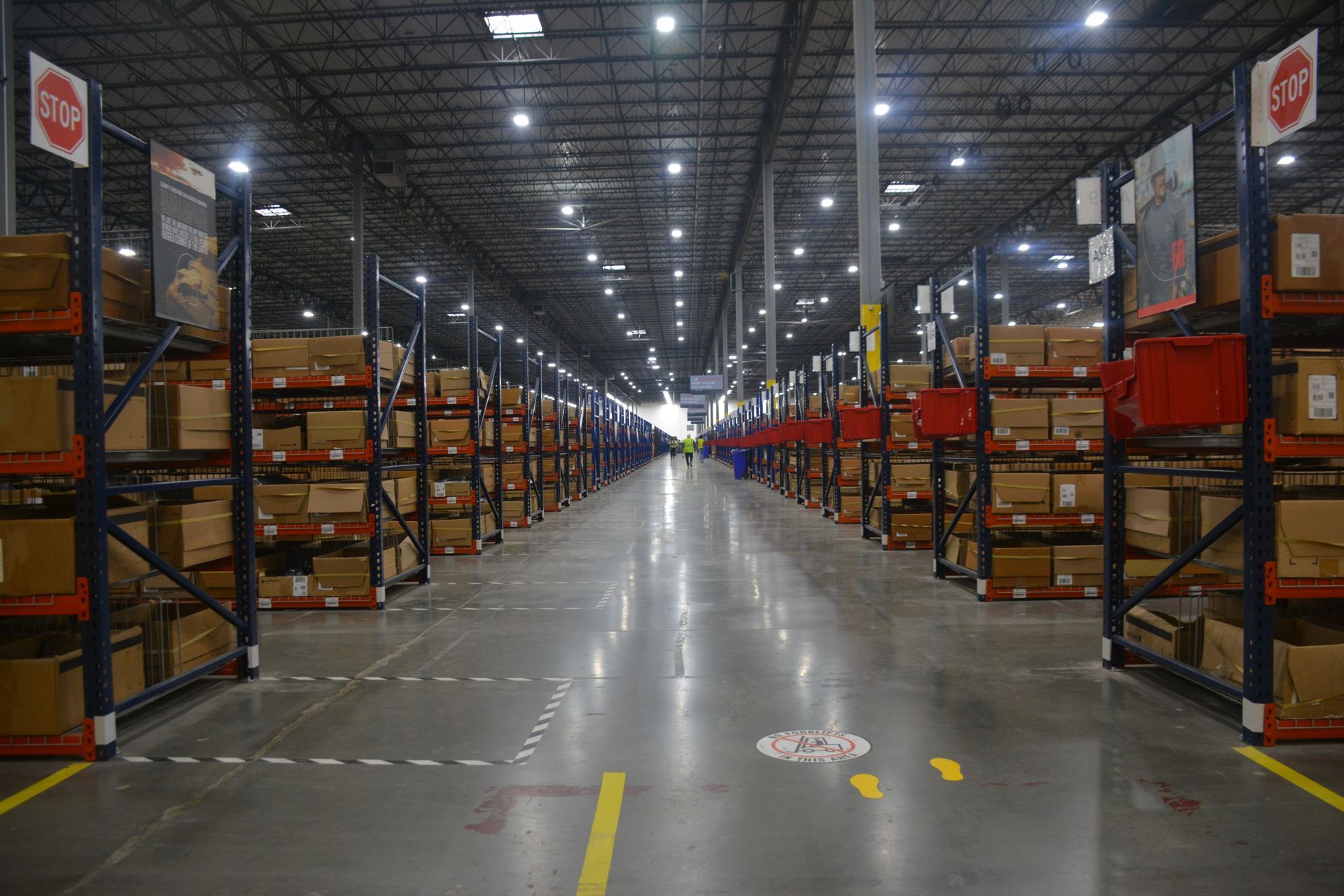
It does not wait for receiving to quiet down, retail orders to clear, or every incoming shipment to find its place. Customers simply begin buying. Promotions launch, popular products accelerate, retailer requirements continue, and inventory keeps entering the building while orders are moving out at an entirely different pace.
For an omnichannel brand, that is what makes peak season particularly demanding. The challenge is not merely fulfilling more ecommerce orders. It is sustaining the rest of the business while one part of it becomes considerably busier.
Peak Does Not Replace Your Normal Business
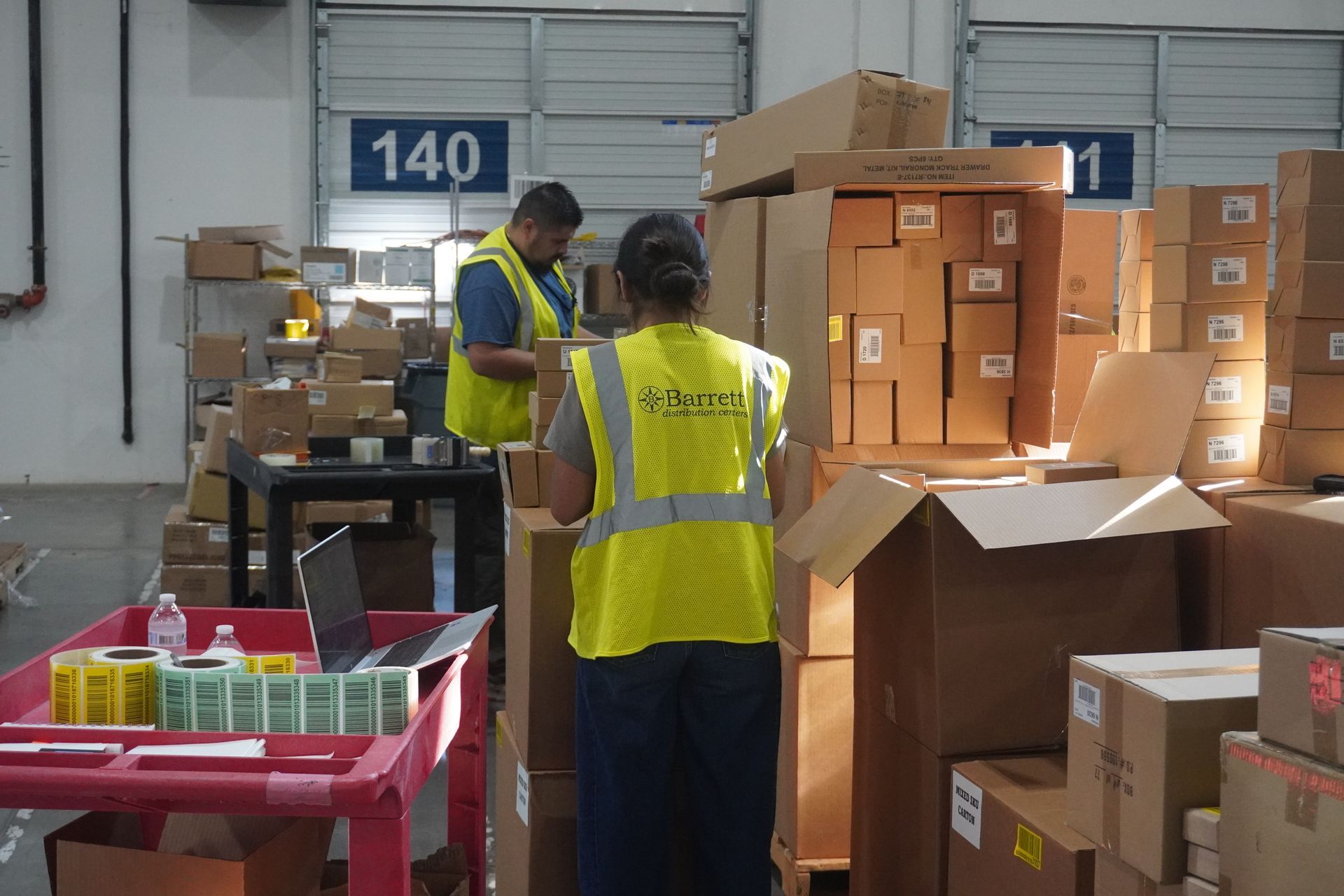
A holiday forecast might predict a significant increase in direct to consumer orders, but those orders do not exist in isolation. Business to business shipments still need attention. Retail commitments remain. Inventory must be received. Special projects may continue.
Personalized orders can require additional touches at precisely the moment speed becomes increasingly important.
Harrison Smith, Director of Commercial Revenue at Barrett Distribution Centers, emphasizes the importance of examining these patterns rather than relying on broad annual averages.
“It’s looking at yearly trends, looking at within the year, what does that look like? Do you have those peaks?”
Understanding the peak is important. Understanding everything happening around the peak is equally consequential.
A brand could finish the year with an average of 5,000 monthly orders, for example, while experiencing dramatically different volumes from one month to another. Once promotions, seasonal inventory, retail activity, and multiple sales channels enter the equation, the average begins to conceal more than it reveals.
As Harrison explains,
“When I work with brands, I wanna understand everything about the business.”
That broader perspective gives a fulfillment partner context. It helps explain not simply how much work is coming, but when it is coming, where it is coming from, and what else the operation will be responsible for at the same time.
Omnichannel Growth Changes the Peak Season Equation
A growing brand may begin with a relatively straightforward direct to consumer model. Success often introduces something more complicated.
Retail opportunities emerge. Business to business volume grows. Marketplaces become relevant. New products require different handling. Suddenly, fulfillment is no longer about moving one type of order through one channel.
Scott Wilkins has spoken about this progression throughout his years working with Barrett customers. One of the advantages of building an operation capable of supporting multiple channels is that a brand does not have to reinvent its fulfillment strategy every time a new opportunity appears.
That experience becomes especially valuable during peak because each channel brings its own requirements. A direct to consumer order and a major retailer order may contain the same product, but they are not necessarily the same fulfillment task.
Without the right experience behind the operation, Scott cautions that
“brands can get into trouble really, really quickly.”
During the busiest months of the year, there is considerably less room for that learning curve.
Your 3PL Needs More Than a Forecast
Forecasts provide a starting point, but numbers become far more useful when brands explain what is driving them.
If marketing is preparing a major promotion, tell your fulfillment partner. If a retailer order is expected during an already busy week, communicate it early. If inventory is arriving later than planned or a particular product is suddenly outperforming expectations, that information belongs in the conversation too.
This is where a strong 3PL relationship becomes less transactional.
Bryan Corbett at Barrett has described the relationship between brands and their fulfillment partners as one built on expertise, honesty, and trust. His perspective is refreshingly practical:
“Sometimes the customer's not always right. And sometimes Barrett's not always right. Sometimes we make mistakes.”
Peak season does not eliminate those realities. If anything, increased volume magnifies them. Plans change. Forecasts miss. Unexpected problems emerge.
The strength of the operation becomes visible in how people respond.
As Bryan puts it,
“You show your expertise through your honesty and your trustworthiness. You can’t separate the two.”
Growth Should Create Opportunity, Not Fragility
The ultimate objective of peak planning is not to construct a perfectly predictable holiday season. That would be unrealistic.
It is to build enough visibility, communication, and flexibility into the operation that success does not destabilize everything surrounding it.
Your holiday promotion should be allowed to outperform expectations. A retailer opportunity should feel exciting. A sudden surge in demand should represent momentum rather than an immediate operational crisis.
That requires a fulfillment partner capable of seeing the entire business, not simply the orders accumulating in one queue.
Because when holiday volume accelerates, the rest of your business does not disappear.
It keeps moving, and your 3PL needs to be prepared to move with it.
Looking for a 3PL that takes the time to understand your business?
Start a conversation with Barrett Distribution Centers.
Recent Blog Posts