
You Just Landed a Major Retailer. Now What?

Faith Artieda • September 8, 2026

For a growing brand, there are certain moments that make all the work behind the scenes feel worth it. Landing a major retailer is one of them.


Maybe the business started with a small collection of products and a loyal group of customers ordering directly from the website. Over time, those orders became more consistent. The audience grew. More people started recognizing the name, and conversations that once felt aspirational began turning into real opportunities. Then comes the email, the meeting, or the purchase order your team has been working toward. A major retailer wants your product.


It is the kind of news that deserves to be celebrated.


It is also the kind of news that can transform the business almost overnight.


Suddenly, the operation that has been comfortably supporting your direct to consumer business is being asked to do something very different. Instead of preparing individual orders for customers, you may be looking at cases or pallets containing thousands of units. Inventory that once supported one primary sales channel now has to stretch across several. New requirements enter the conversation, and the margin for error becomes smaller because the size of the opportunity has become considerably larger.


Scott Wilkins, Senior Vice President of Customer Solutions at Barrett Distribution Centers, has spent 14 years with Barrett and has watched brands reach this exact point in their growth. In some cases, the shift happens faster than anyone anticipated. A sales team lands the retailer it has been pursuing, the excitement spreads throughout the company, and then someone asks the question that brings everyone back to reality: How are we actually going to handle this?


Retail Changes the Rhythm of Your Business

Direct to consumer fulfillment can become familiar over time. An order comes through a website or marketplace, a few products are picked and packed, and the package travels directly to someone's home.


Retail operates differently.


Orders may move by the case or pallet rather than as individual packages. Products might be headed to a retailer's distribution center or directly to stores. Inventory requirements can change, and retailers often have their own expectations surrounding how products are prepared and delivered.


Then there is the sheer size of the opportunity.


As Scott explained, “A PO to Walmart could be tens of thousands of units, right? Hundreds of thousands of dollars.”

That kind of order can propel a brand forward quickly, but it also raises the stakes. Scott points to retailer requirements and chargebacks as areas where brands need to be particularly careful.


“Brands can get into trouble really, really quickly if they don't really have a 3PL partner that can handle everything that a retailer is gonna throw at them.”


For brands making this transition, a few areas deserve particular attention:

  • Retailer requirements: Every retailer operates a little differently, and understanding those expectations before orders begin moving can prevent expensive mistakes.
  • Inventory planning: A large retail order can consume inventory quickly, especially when ecommerce customers are still ordering from the same product assortment.
  • Order profiles: Shipping individual packages to consumers is very different from preparing cases or pallets for stores and distribution centers.
  • Retail compliance: Labeling, routing, documentation, packaging, and delivery requirements become increasingly important as larger retailers enter the picture.
  • Room for what comes next: One successful retail relationship can quickly lead to another. Your fulfillment operation should be prepared for the business to continue evolving.


None of these considerations make landing a retailer any less exciting. They simply illustrate why the fulfillment conversation changes as the opportunity gets bigger.


Has Your 3PL Done This Before?

When a brand begins evaluating whether its current fulfillment operation can support retail growth, the number of questions can quickly become overwhelming. Technology, locations, capacity, pricing, systems, and capabilities all deserve consideration.


Scott recommends starting with something much simpler:

“Tell me about some of the customers that are like me.”


It is a straightforward question, but the answer can reveal quite a bit about the experience sitting across the table from you.


If you are an apparel brand preparing to enter mass retail, has the 3PL supported similar apparel companies? If Walmart is part of your future, does the provider already understand what fulfilling Walmart orders involves? What challenges have similar brands encountered, and what did the 3PL learn from helping them through those situations?


More importantly, Scott encourages brands to understand what their own teams need to be prepared for when entering these relationships. A strong 3PL should not simply tell you what it can do. It should help you understand what successful growth will require from your business as well.


That is where experience begins to feel less like a credential and more like a resource.


“We're as much consultants to a lot of these companies as a fulfillment and 3PL and warehouse provider,” Scott said. “We're solving problems every single day.”


When your company is entering unfamiliar territory, having people around the business who have already encountered similar situations can make that next step considerably less daunting.


Sometimes Growth Arrives Before You Feel Ready

There is a funny thing about growth. Companies spend years pursuing it, but the biggest opportunities rarely arrive at the perfect moment.


A sales team lands the account everyone has been chasing. The purchase order comes through. Everyone celebrates. Then someone eventually asks the practical question: How are we going to handle this?


Scott has seen that exact scenario play out.

“There’s been more than a number of examples where we get a phone call like one of their sales guys just landed a huge PO with Walmart and they're like, ‘My gosh, how are we gonna handle this?’”


For Scott and the Barrett team, the response comes from having navigated those situations before.

“We got you. Like we'll walk you through it, we'll tell you how to handle it.”


There is something reassuring about those words because they capture what a strong fulfillment relationship should provide during a period of change. Your 3PL should not become another problem your team has to solve when a major opportunity arrives. It should be one of the reasons your team feels prepared to pursue that opportunity in the first place.


That does not mean every transition will be effortless. Retail introduces complexity, and every brand has its own requirements. What matters is having experienced people who can recognize potential complications early and help your team work through them before they grow into larger problems.


The First Retailer May Only Be the Beginning

A brand rarely grows in a perfectly straight line.


A company might begin by selling exclusively through its own website before adding marketplaces, retail, wholesale, or other channels. One retailer may become several, while the ecommerce side of the business continues growing at the same time.


Scott has watched Barrett evolve alongside brands making exactly that transition. What was once a more traditional warehousing business has expanded into a broader omnichannel model capable of supporting direct to consumer orders alongside the very different demands of retail.


The idea is to give brands room to grow without forcing them to rethink their fulfillment relationship every time the business reaches another milestone.


Scott refers to this as finding a “forever 3PL.” Brands, he explained, “don't wanna start somewhere and then have to find a new 3PL as their business grows and it changes.”


That perspective becomes especially relevant after landing a major retailer. The immediate purchase order deserves attention, but so does what might follow it. If another retailer comes calling six months from now, the fulfillment foundation should make that conversation easier, not more intimidating.


Be Ready for What Comes Next

Landing a major retailer is validation that something is working. Your product has earned attention, new customers are within reach, and the business is stepping into a larger arena.


Your fulfillment operation should give you the confidence to enjoy that moment rather than immediately wonder whether you can keep up with it.


Scott describes Barrett's role in this stage as helping brands navigate “that switch or that evolution or that level up” as they become more sophisticated omnichannel businesses.


That is ultimately what the right fulfillment relationship should make possible. It is not simply about getting one enormous purchase order out the door. It is about creating a foundation that can accommodate the opportunities that follow without losing sight of the customers who helped the brand get there in the first place.


So celebrate landing the retailer. It is a big deal.


Then make sure your business is ready when the next one calls.


Looking for a 3PL that takes the time to understand your business?

Start a conversation with Barrett Distribution Centers.

Recent Blog Posts
Four Peaks, One Partner: An Inside Look at How Barrett Scales With SCOUT, Every Peak
By Megan Krauss • October 23, 2026
Most brands brace for one peak season a year. The holidays hit, volume spikes and everyone holds their breath until January. SCOUT Bags does it four times. Yes, that's right, four times... For 22 years, the family-owned brand has built a loyal following with bold prints, practical totes and a sense of fun you can spot from across a parking lot. What you can't see from the outside is the operation it takes to keep those bags moving, especially when a new collection drops. Four Launches. Four Peaks. SCOUT releases four major seasonal collections every year. Each one is a full go-to-market event, with roughly 250 documented steps behind it across the organization. When a collection goes live, the warehouse has to ship more than 120,000 units in about two weeks. Then it settles back into everyday demand, until the next launch comes around. That rhythm creates challenges most brands never face:  Two seasons on the floor at once. The next collection arrives while the current one is still selling, so inventory for both has to be received, stored and picked side by side. Two demand patterns at once. More than half of SCOUT's DTC assortment is evergreen, while wholesale runs on the seasonal calendar. The operation has to serve both without either one slowing down. Peaks on a nontraditional calendar. Staffing can't just ramp up for Q4. It has to flex around SCOUT's launch dates. Many channels with different rules. SCOUT sells DTC, on Amazon, through 1,500+ retailers, to key accounts and through corporate gifting. Each channel has its own requirements. And SCOUT plans well past the next drop. The team updates a five-year plan every year and maps its supply chain 18 to 24 months out. They needed a fulfillment partner that could keep pace with where the brand is headed, not just where it is today. Built to Flex, Launch After Launch Barrett built SCOUT's omnichannel operation around one idea: the warehouse has to move as fast as the brand does. Multiple pick fronts and flexible staffing let the team scale labor and throughput for each launch window, then shift back for everyday orders. A Single-Line Single-Unit (SLSU) quick-ship solution keeps single-item orders moving fast. A Flex-Wall sorting system handles more complex, multi-line orders. Paccurate cartonization technology picks the right box and speeds up pack-out. In-house embroidery, monogramming and patch sewing support DTC personalization and SCOUT Select, the brand's corporate gifting and customization business. Location matters too. Barrett's operation sits near SCOUT's Washington, D.C. headquarters and the Port of Baltimore, keeping the teams close and inbound freight moving into Mid-Atlantic and Northeast markets. The Results Through every launch, SCOUT has maintained 99.6% DTC on-time shipping. That's while moving 120,000+ units in a two-week window and keeping the rest of the business running. With Barrett handling physical fulfillment, SCOUT's internal team spends less time troubleshooting orders and chargebacks and more time on customers. They've hit the customer service standards they set for themselves and continue to maintain them. They've also had room to sharpen NetSuite processes, automate manual work and open doors to B2B, drop ship and expanded EDI. Kate Hanlan Kegan , President of SCOUT Bags, put it simply: "The biggest impact has really been supporting scale. In the past, we would have had to turn opportunities down. Having the ability to say yes to more has been really advantageous for us." Hear It From SCOUT Kate sat down with Barrett Distribution Centers, Inc . ’s Partnerships and Product Marketing Manager, Katherine Wroth , to share what it took to find a partner who could handle seasonal chaos and scale with SCOUT for years ahead.
By Faith Artieda • October 23, 2026
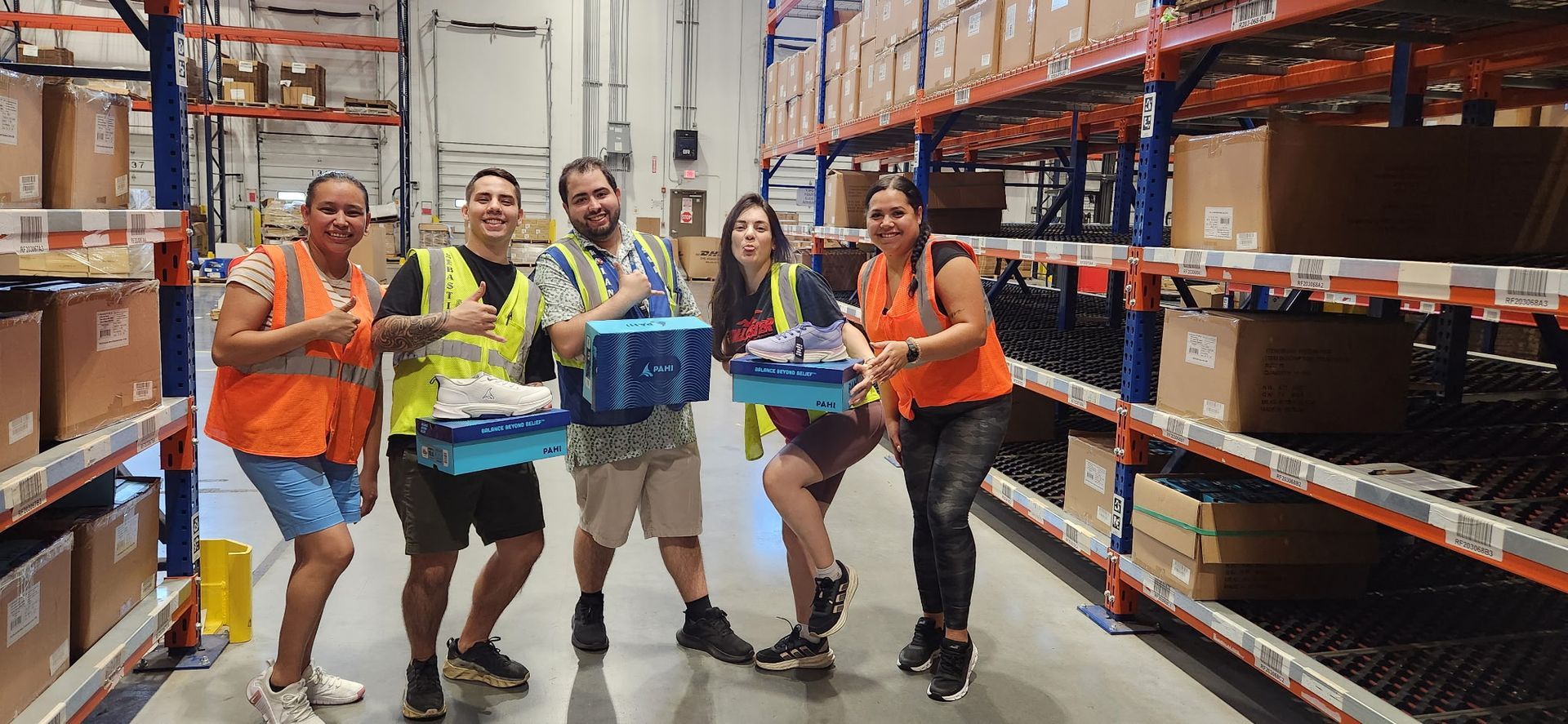
FRANKLIN, Mass., Aug. 11, 2026 — Barrett Distribution Centers , a leading third-party logistics provider specializing in eCommerce fulfillment, announced a new partnership with PAHI Footwear , an emerging footwear and wellness brand focused on balance, stability and confidence. Barrett is providing omnichannel warehousing, fulfillment and managed transportation services from its Memphis fulfillment campus to support PAHI's direct-to-consumer, independent retail and mass retail channels. "As a growing brand, choosing the right fulfillment partner was a big decision for us," said Luke Schapfel , logistics manager at PAHI. "From the beginning, Barrett took the time to understand our business and where we're headed. Their team was responsive, easy to work with and genuinely invested in helping us build the right foundation for growth. That gave us confidence we had the right partner." The implementation began in late 2025 with a phased rollout. Barrett first onboarded PAHI's direct-to-consumer (D2C) business before expanding support to independent retailers and national retail partners throughout the second and third quarters of 2026. "Barrett has a successful history working with emerging apparel and footwear brands and helping them scale across omnichannel programs," said Scott Hothem , senior vice president of customer solutions at Barrett. "We're excited to support PAHI as it builds its presence in the U.S. market from our Memphis fulfillment campus. We look forward to helping the brand grow across both direct-to-consumer and retail channels." Barrett currently supports approximately 500 SKUs of men's and women's footwear for PAHI across direct-to-consumer, independent retail and mass retail channels. The partnership provides PAHI with a scalable fulfillment foundation as the brand continues to grow across channels. About PAHI Footwear PAHI was born from a simple yet powerful vision: to create footwear that combines comfort, innovation, and stability. The brand was founded to meet the growing need for footwear that offers not only style but also balance and support, empowering people to move with confidence throughout their daily lives. Drawing inspiration from the 5000-year-old twin-hull boat technology, PAHI introduced the P.O.R.T. system, revolutionizing how shoes provide balance. About Barrett Distribution Centers Since 1941, Barrett has provided customized third-party logistics (3PL), direct-to-consumer (DTC) eCommerce fulfillment, omnichannel distribution, managed transportation solutions and retail compliance for clients across all industries, with a focus on apparel & footwear, health & beauty, consumer packaged goods (CPG) and education. Barrett continues to be a leading 3rd party logistics provider in North America, known for superior execution, customer engagement and direct access to senior leadership decision makers. As a member of Inc's fastest growing companies list 15+ times, Barrett is big enough to do the job and still small enough to deeply care about your business. Brands interested in a new 3PL partnership may contact Barrett directly here . Media Contact: Faith Artieda Marketing Content Specialist faith.artieda@barrettdistribution.com
By Faith Artieda • October 23, 2026
FRANKLIN, Mass., Aug. 18, 2026 - Brav , a Norwegian house of ski and outdoor brands, has selected Barrett Distribution Centers as its U.S. omnichannel fulfillment partner to support continued growth across retail and direct-to-consumer channels. Barrett will fulfill Brav's portfolio of ski wax, tuning products, technical apparel, outdoor equipment and accessories from its Memphis, Tennessee fulfillment campus. "For us, the site visit was about more than seeing a facility. It was about meeting the people we would be trusting with our brands," said Michael Bond, director of finance and operations at Brav. "The Barrett team took the time to understand what matters to us and stayed closely involved throughout the transition. That gave us a lot of confidence in the partnership and made us eager to see what's ahead." Brav's portfolio includes Swix, a recognized name in cross-country skiing for more than 75 years, alongside Toko, Ulvang, Lundhags, Helsport and other outdoor brands. Barrett's operation supports the seasonal demands of the business with retail compliance, multi-brand SKU management and temperature-sensitive handling for select wax products. "Brav has built an impressive portfolio of brands with a long history in the ski and outdoor industry, and we're proud to support the next stage of their U.S. growth," said Ed Ryan , vice president of customer solutions at Barrett. "From the beginning, our teams worked closely together to understand the seasonal demands and operational requirements of the business. We're excited about the partnership and look forward to supporting Brav and its brands for years to come." Barrett worked alongside Brav to transition the company's U.S. fulfillment operation, with team members traveling to Brav’s existing warehouse to support the transfer of inventory and operational functions. Following the onboarding process, the operation went live earlier this summer. About Brav Brav is a major player in the sports and outdoor industry and manages some of the most influential brands in the marketplace, including Swix, Toko, Lundhags and Helsport. The mission of Brav is to improve our customers’ quality of life. Acting responsibly, we do this by connecting and developing the best talents in the sport and outdoor industry supporting them to develop and produce the most innovative products and services. About Barrett Distribution Centers Since 1941, Barrett has provided customized third-party logistics (3PL), direct-to-consumer (DTC) eCommerce fulfillment, omnichannel distribution, managed transportation solutions and retail compliance for clients across all industries, with a focus on apparel & footwear, health & beauty, consumer packaged goods (CPG) and education. Barrett continues to be a leading 3rd party logistics provider in North America, known for superior execution, customer engagement and direct access to senior leadership decision makers. As a member of Inc's fastest growing companies list 15+ times, Barrett is big enough to do the job and still small enough to deeply care about your business. Brands interested in a new 3PL partnership may contact Barrett directly here . Media Contact: Faith Artieda Marketing Content Specialist faith.artieda@barrettdistribution.com
More Posts