Personalization: A Game Changer for Direct-to-Consumer E-commerce Brands

Katherine Wroth • October 3, 2024

Personalization: A Necessity in eCommerce

Did you know 65% of consumers now expect brands to understand and cater to their individual preferences and needs? Once considered a luxury, personalization has now become essential for brands looking to stand out in the competitive eCommerce space.

The Evolution of 3PL Personalization Services at Barrett

Our journey into specialized services began several years ago, driven by growing customer demands. Initially, we offered essential services like ticketing, tagging, repackaging and re-boxing. As our clients’ needs expanded, we adapted by incorporating advanced services like RFID tagging, reverse logistics and high-volume returns management.


Personalization: A Game Changer for Direct-to-Consumer Brands


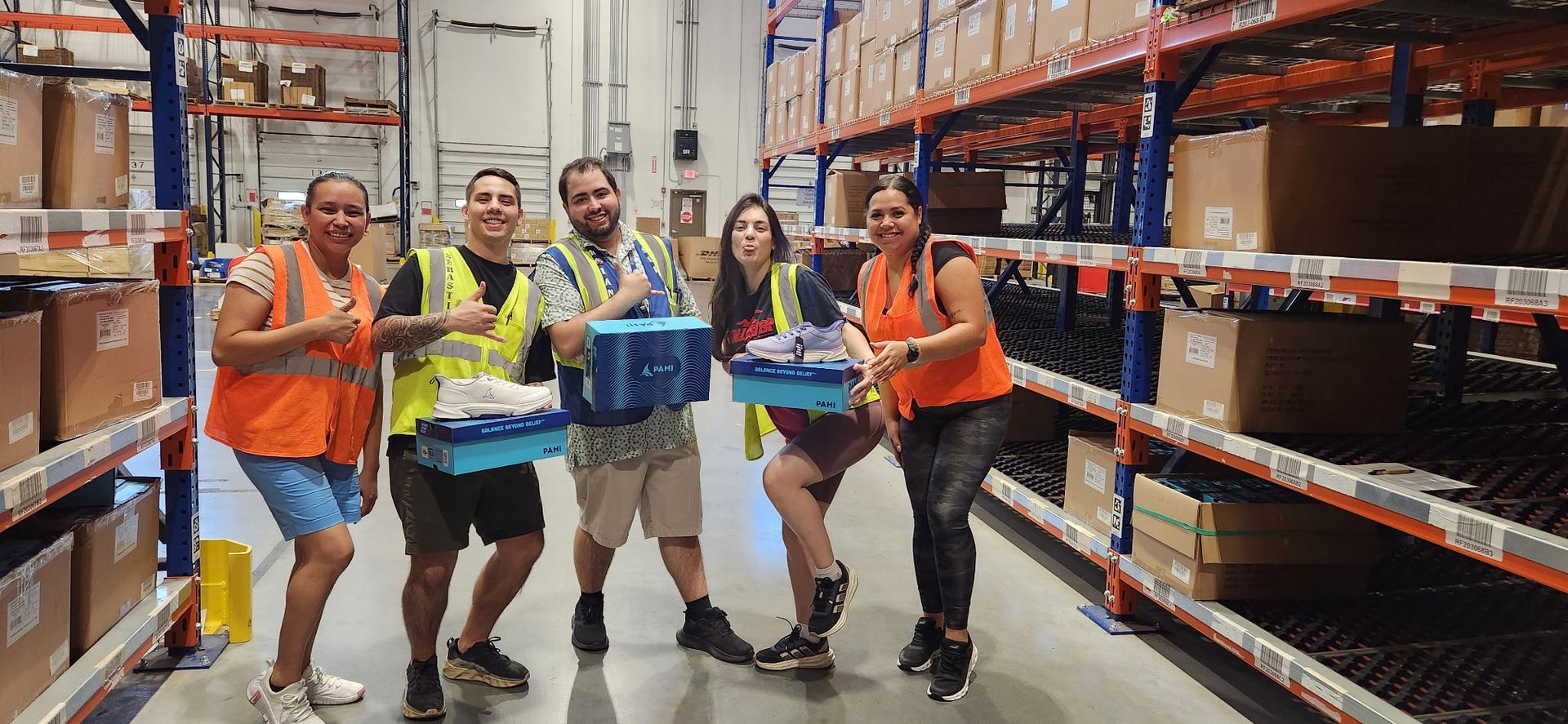
Personalization has become a key differentiator, especially for direct-to-consumer brands. Barrett has invested in in-house services like embroidery, monogramming, and laser engraving to meet this growing demand. These capabilities enable our clients to add personal touches to their products, creating stronger connections with their customers.


We offer in-house personalization services to help brands enhance their value in a crowded marketplace. As more brands strive to stand out, this area of our business continues to grow and evolve.


The Strategic Role of Boutique Services

Offering boutique 3PL services goes beyond logistics — it enhances the customer experience. For growing brands, the ability to provide personalized products can significantly impact customer loyalty and retention. At Barrett, we ensure that our high-touch personalized services meet the needs of our clients while enabling them to offer their customers a unique and tailored experience.

By keeping these services in-house, we maintain strict control over quality, speed and flexibility, ensuring our clients can respond to customer demands efficiently and precisely.


Top 20 Personalization and Customization Services Brands Are Leveraging

  1. Embroidery – Adding custom stitched logos, names or designs to apparel and accessories.
  2. Monogramming – Custom initials or designs added to products like bags, towels or clothing.
  3. Laser Engraving – Personalizing products such as metal, leather or wood with precise engraved designs or text.
  4. Custom Printing – Personalized printing on products like t-shirts, mugs, posters and packaging.
  5. RFID Tagging – Embedding custom RFID tags in products for tracking and inventory management.
  6. 3D Printing – Creating custom one-of-a-kind items or parts based on customer specifications.
  7. Custom Packaging – Offering personalized packaging designs for gifts, products or shipments.
  8. Heat Press Vinyl – Applying custom vinyl designs or logos to apparel and accessories.
  9. Engraved Jewelry – Personalizing rings, necklaces, bracelets and other jewelry with names or messages.
  10. Custom Color Options – Allowing customers to choose specific color combinations for products.
  11. Custom Sizing/Measurements – Tailoring products to specific body measurements or fit preferences (especially in fashion).
  12. Personalized Labels – Adding custom labels or stickers to products, especially for limited editions or exclusive releases.
  13. Digital Customization – Allowing customers to design and configure digital products, such as personalized skins for gadgets or electronics.
  14. Custom Engraved Glassware – Personalizing glass items such as drinkware or decorative pieces with names or logos.
  15. Personalized Stationery – Custom-designed notepads, invitations or cards for personal or professional use.
  16. Photo Customization – Adding personal photos to products like books, canvases or keepsakes.
  17. Customizable Shoes – Offering custom patterns, colors or engravings on footwear.
  18. Name/Date Embossing – Adding embossed names, initials or dates to leather goods such as bags, wallets or notebooks.
  19. Custom Fragrance Creation – Allowing customers to mix and create personalized scents.
  20. Personalized Gift Wrapping – Offering custom wrapping paper or unique packaging for special occasions.


As more brands embrace personalization as a key growth strategy, we are well-equipped to provide the high-touch boutique services they need. Our commitment to expanding these offerings positions us as a critical partner for brands seeking to deliver exceptional personalized experiences to their customers.


Ready to elevate your brand's customer experience with personalized, high-touch 3PL services? Contact us today to discover how our in-house personalization services can help your brand stand out.

Recent Blog Posts

By Faith Artieda July 28, 2026
When a customer places an online order, a lot happens behind the scenes before that package arrives at their doorstep. One of the most important steps is pick and pack fulfillment—a process that directly impacts order accuracy, delivery speed, and the overall customer experience. For growing brands, understanding how pick and pack works can help you choose the right fulfillment partner and build a more efficient supply chain. What Is Pick and Pack Fulfillment? Pick and pack fulfillment is the process of selecting products from warehouse inventory ("picking") and packaging them for shipment ("packing"). Once an order is received, a warehouse associate locates the correct items, verifies the order, securely packages the products, and prepares them for carrier pickup. While the process may seem straightforward, efficiency and accuracy are critical. Even small mistakes can lead to shipping delays, returns, and dissatisfied customers. Why It Matters A well-managed pick and pack operation helps businesses improve order accuracy, reduce fulfillment errors, and ship orders more efficiently. Modern warehouses use warehouse management systems (WMS), barcode scanning, and real-time inventory tracking to ensure products are picked correctly and inventory remains accurate. According to the Association for Supply Chain Management (ASCM), digital warehouse technologies play an important role in improving inventory control, operational efficiency, and customer service. How Barrett Helps At Barrett Distribution Centers, pick and pack fulfillment is designed to support growing brands across ecommerce, retail, and omnichannel operations. By combining experienced warehouse teams with advanced technology and proven processes, Barrett helps clients deliver accurate orders, maintain inventory visibility, and scale fulfillment as their business grows.  Pick and pack fulfillment is much more than putting products into a box—it's a key part of creating a positive customer experience. Choosing a 3PL with the right people, technology, and processes can help your business improve efficiency, reduce errors, and keep customers coming back.
By Faith Artieda July 24, 2026
Choosing the right third-party logistics (3PL) provider is one of the most important decisions a growing business can make. While traditional warehouses simply store and ship products, today's supply chains require much more. A modern 3PL should serve as a strategic partner—helping businesses improve efficiency, reduce costs, and deliver a seamless customer experience. Whether you're an ecommerce retailer, consumer packaged goods manufacturer, or omnichannel brand, here are the essential services every modern 3PL should offer. Comprehensive Warehousing and Inventory Management Every successful fulfillment operation starts with accurate inventory management. A modern 3PL should provide secure warehousing, efficient receiving processes, organized storage, and real-time inventory tracking. With accurate inventory data, businesses can avoid stockouts, reduce excess inventory, and make better purchasing decisions. Real-time visibility also allows customers to quickly respond to demand changes while maintaining confidence in inventory accuracy. Omnichannel Fulfillment Today's consumers purchase products through a variety of channels, including ecommerce websites, online marketplaces, retail stores, and wholesale distributors. Managing these channels separately often creates unnecessary complexity. A modern 3PL should offer omnichannel fulfillment, allowing businesses to manage inventory from a centralized location while fulfilling orders across every sales channel. This helps improve efficiency, reduce inventory duplication, and create a consistent customer experience regardless of where an order originates. Transportation Management Shipping costs can significantly impact profitability. That's why transportation management has become an essential service offered by leading 3PL providers. A modern logistics partner should help businesses optimize carrier selection, compare shipping rates, improve transit times, and provide shipment tracking. Transportation expertise helps companies reduce costs while ensuring products reach customers quickly and reliably. Value-Added Services Not every order is as simple as picking and packing a product. Many businesses require additional services to meet customer or retailer requirements. Value-added services may include: Kitting and assembly Product labeling and relabeling Retail ticketing Custom packaging Returns processing Quality inspections Cross-docking Having these services available through one logistics provider simplifies operations and eliminates the need for multiple vendors. Advanced Technology and Integrations Technology has become one of the biggest differentiators among logistics providers. Businesses should look for a 3PL that offers a robust warehouse management system (WMS), real-time inventory visibility, order tracking, customer dashboards, and integrations with ecommerce platforms, ERP systems, and transportation software. These technologies provide valuable insights into inventory levels, fulfillment performance, and operational efficiency, allowing businesses to make informed decisions backed by real-time data. Reporting and Performance Metrics A modern 3PL should do more than fulfill orders—it should provide actionable insights. Regular reporting on inventory accuracy, order fulfillment, shipping performance, and operational KPIs helps businesses identify trends, improve forecasting, and uncover opportunities for continuous improvement. Data-driven decision-making is becoming a competitive advantage for organizations looking to optimize their supply chains. A Commitment to Continuous Improvement The best logistics providers never stop looking for ways to improve. Through regular business reviews, operational analysis, and process optimization, they work collaboratively with customers to increase efficiency and reduce costs over time. Rather than simply executing orders, a modern 3PL should proactively recommend improvements that support long-term business growth. How Barrett Delivers a Modern 3PL Experience At Barrett Distribution, technology and continuous improvement are at the core of every customer relationship. Barrett has invested in advanced warehouse management systems, transportation management technology, customer dashboards, and data analytics that provide real-time visibility into inventory, fulfillment performance, and key operational metrics. These tools help customers make informed decisions while improving efficiency across their supply chain. Combined with a culture focused on continuous improvement, Barrett works alongside customers to identify new opportunities for process optimization, cost savings, and operational excellence. Instead of simply providing warehouse space, Barrett delivers customized logistics solutions designed to evolve with each customer's business. Choosing the Right 3PL  When evaluating a logistics partner, it's important to look beyond warehouse capacity alone. The right 3PL should offer advanced technology, scalable fulfillment services, transportation expertise, value-added capabilities, and a commitment to continuous improvement. A provider that combines these services with industry experience and a customer-first approach can help businesses build a more agile, efficient, and resilient supply chain—one that's ready to support growth for years to come.
By Faith Artieda July 23, 2026
Ecommerce fulfillment is the process of receiving, storing, picking, packing, and shipping products ordered online. It also includes inventory management, order tracking, and returns processing. Every time a customer places an order through an ecommerce website or online marketplace, the fulfillment process begins. As online shopping continues to grow, customers expect fast shipping, accurate orders, and real-time tracking. A well-managed fulfillment operation helps businesses meet these expectations while improving efficiency and creating a better customer experience. How Ecommerce Fulfillment Works The process starts when inventory arrives at a fulfillment center. Products are received, inspected, and stored in designated warehouse locations. Using a warehouse management system (WMS), inventory is tracked in real time, giving businesses visibility into stock levels and order activity. When an order is placed, warehouse associates pick the correct items, pack them securely, and prepare them for shipment. Once the order ships, customers receive tracking information, and if a return is needed, the fulfillment provider manages the reverse logistics process. Why Businesses Outsource Ecommerce Fulfillment Many growing businesses choose to partner with a third-party logistics (3PL) provider instead of managing fulfillment in-house. Outsourcing allows companies to reduce overhead costs, improve shipping efficiency, and scale operations without investing in additional warehouse space or labor. A 3PL can also provide access to advanced technology, carrier relationships, and fulfillment expertise that help businesses improve order accuracy and delivery performance. The Importance of Omnichannel Fulfillment Today's brands often sell through multiple channels, including their own website, Amazon, retail stores, and wholesale partners. Omnichannel fulfillment allows businesses to manage inventory from one location while fulfilling orders across every sales channel. This streamlined approach helps improve inventory accuracy, reduce operational complexity, and create a consistent customer experience. How Barrett Supports Ecommerce Brands As ecommerce businesses grow, their fulfillment needs become more complex. Barrett Distribution helps brands simplify those operations with customized fulfillment solutions designed to support direct-to-consumer, retail, wholesale, and marketplace orders from a single inventory.  With advanced warehouse management technology, real-time inventory visibility, transportation management, and decades of fulfillment expertise, Barrett helps customers improve efficiency while delivering the speed and accuracy today's consumers expect.
More Posts