
Modern Material Handling Feature: Automation where it counts at Barrett

Katherine Wroth • September 9, 2024
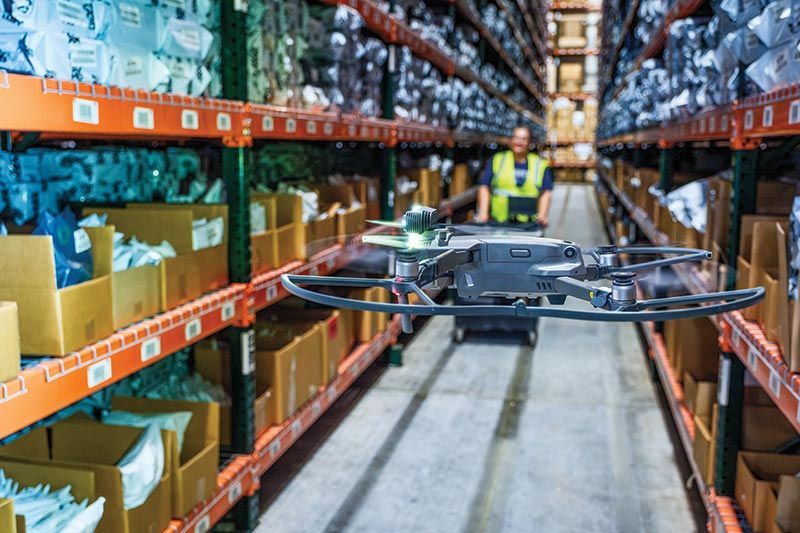
By deploying a drone-based inventory monitoring solution at its Hillsborough, N.J., facility, Barrett Distribution Centers, a growing 3PL, has taken license plate accuracy to the next level, helping with order picking and eliminating time spent on manual cycle counts.
  • Slide title

    Write your caption here
    Button
  • Slide title

    Write your caption here
    Button
  • Slide title

    Write your caption here
    Button
  • Slide title

    Write your caption here
    Button
  • Slide title

    Write your caption here
    Button
  • Slide title

    Write your caption here
    Button
  • Slide title

    Write your caption here
    Button
  • Slide title

    Write your caption here
    Button
  • Slide title

    Write your caption here
    Button
  • Slide title

    Write your caption here
    Button

By Roberto Michel at Modern Material Handling


Extremely high accuracy over inventory sitting in storage is a nice thing to have in a DC, but traditionally it has come at a cost: hours of labor spent hand-scanning bar coded license plates or “LPs” on pallets or cases and then reconciling any discrepancies.


Of course, the cost of not expending labor on LP accuracy is downstream delays in filling orders due to misplaced inventory. Given the choice between unhappy customers or expending some labor on LP counts and inventory adjustments, many operations have chosen some form of LP counting and inventory monitoring.


This dedication to inventory accuracy has long been a pillar of operational excellence for Barrett Distribution Centers, a third-party logistics (3PL) company, explains Jim Rapoza, Barrett’s vice president of business process optimization.


“LP accuracy is one of our key internal drivers for success at Barrett. The more accurate your inventory is, the more productive you can be—because you don’t have unexpected shortages—so you can just pick orders instead of searching for inventory or having to replenish,” says Rapoza. “Our senior leadership team, Tim Barrett and Art Barrett, also view high LP accuracy as a driver for employee satisfaction because when it comes time to pick, our associates can execute their work without delay, which contributes to a high level of job satisfaction. As a result, we take LP accuracy very seriously, because it’s good for our customers, and it’s also good for our employees.”


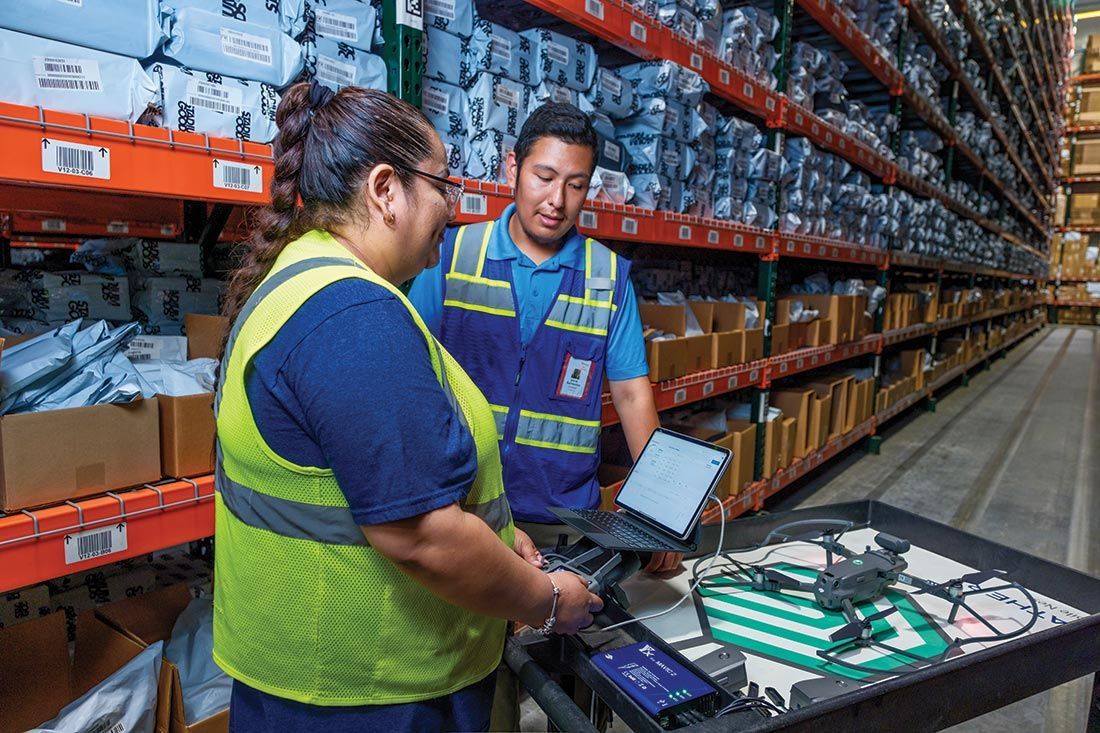
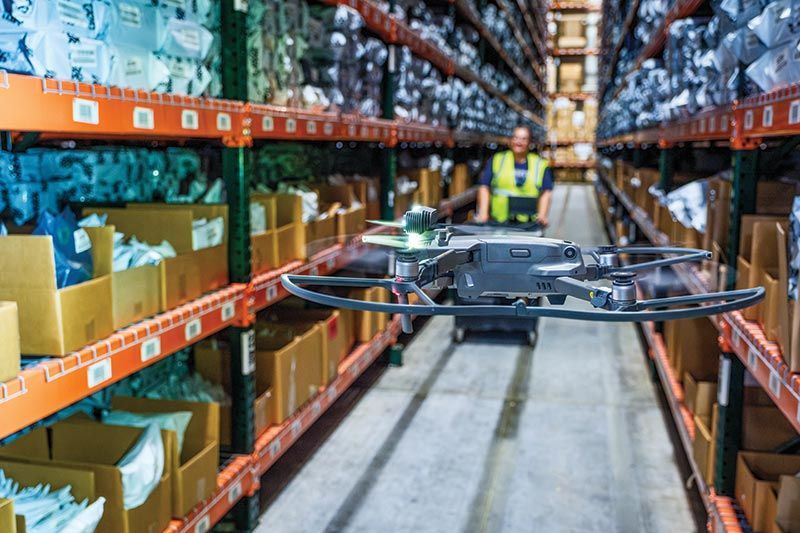
The last couple of years have seen Barrett Distribution Centers further improve on LP accuracy while removing the cost involved in manual data collection by deploying a warehouse drone solution (Gather AI) to automate the reading and monitoring of LP labels in storage positions. The system’s software, which uses artificial intelligence (AI), provides a dashboard view that compares what the drone missions find against warehouse management system (WMS) data.


Barrett doesn’t use the drones at all of its warehouses, but it does use them at six sites to automate the counting of LP bar codes on pallets or to count unique cases with LP bar codes.


A single operator managing a drone mission can capture LPs more quickly and accurately than a team of inventory specialists can with manual scanning. The cost comparison is not even close, Rapoza adds. Manual LP cycle counting costs roughly $1.50 per scan; and the drone system costs around 10 to 20 cents per scan—a fraction of the cost.


The drones have been effective at reading the labels and generating reports that pinpoint any inventory variances with Barrett’s WMS. At sites that use the drones, LP accuracy exceeds 99%, and at one facility in Hillsborough, N.J., where the drones are used to capture LPs on unique cases, the accuracy level has reached 99.9%. The drones are used frequently to keep LP accuracy at a near-perfect level.


“The ease of being able to capture a high volume of LP information with a single drone, compared to using a team of people, means that we can perform LP cycle counts more frequently now, so the inventory variances surface much faster,” says Rapoza. “When we first deployed the drones, we saw a pretty significant spike in inventory variances that we were then able to correct in a much shorter time-frame than if we were just deploying people to count LPs. That helps us keep inventory accuracy optimally high for the sites and areas we’ve deployed them in.”


Targeted use cases


Since 1941, Barrett has provided 3PL services, including direct-to-consumer (DTC) e-commerce fulfillment, omni-channel distribution, as well as transportation management and retail compliance for clients.


Customers represent industries including apparel and footwear, health and beauty, consumer packaged goods, consumer electronics, food, candy, grocery and automotive. The company currently has 23 DCs nationwide comprising roughly 7 million square feet, including sites in Greater Boston, New Jersey, New York, Baltimore, Memphis, Dallas and California.


With a motto of, “Big enough to do the job and still small enough to deeply care about your business,” Barrett adapts its services around the fulfillment needs of its clients. For most of its clients, the WMS used to manage and fulfill orders is based on a system called Synapse (Made4Net, formerly Zethcon).


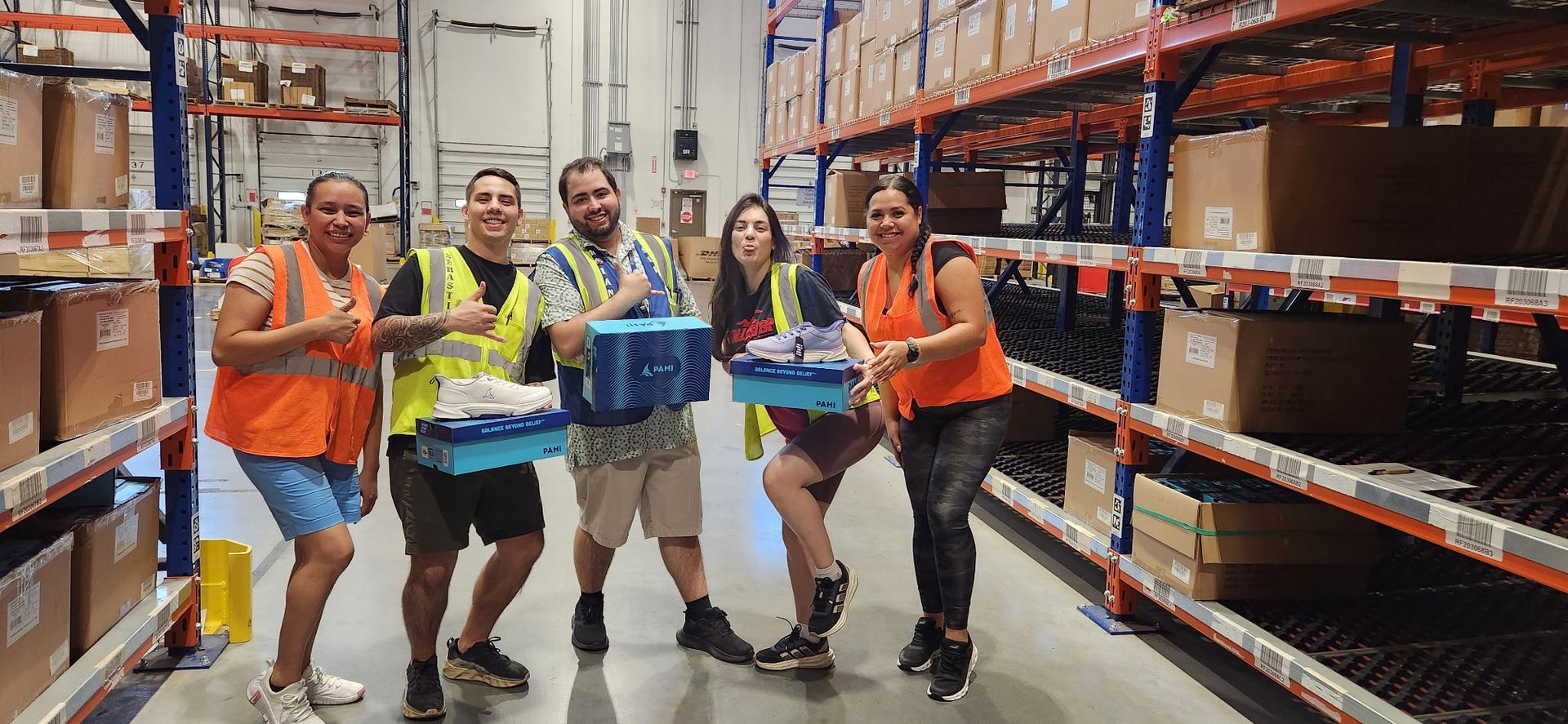
The use of Gather AI drones across Barrett’s network is largely focused on reading LPs on pallets, though at its fulfillment center in Hillsborough, N.J., the drones are used to scan LP labels on unique cases of shoes for Barrett’s client Stadium Goods, a sneaker and apparel marketplace. These aren’t the average sneakers one would find at any retail store, but rather, collector and special edition shoes that in some instances might fetch several thousand dollars per pair. Most end-customers are typically buying one pair of unique shoes.


As a result, one shoebox with one pair of shoes typically equates to one case for the vast majority of goods in storage at Hillsborough. An inventory authentication team from Stadium Goods works on site to authenticate each pair of shoes coming in before it is processed and stored by Barrett associates.


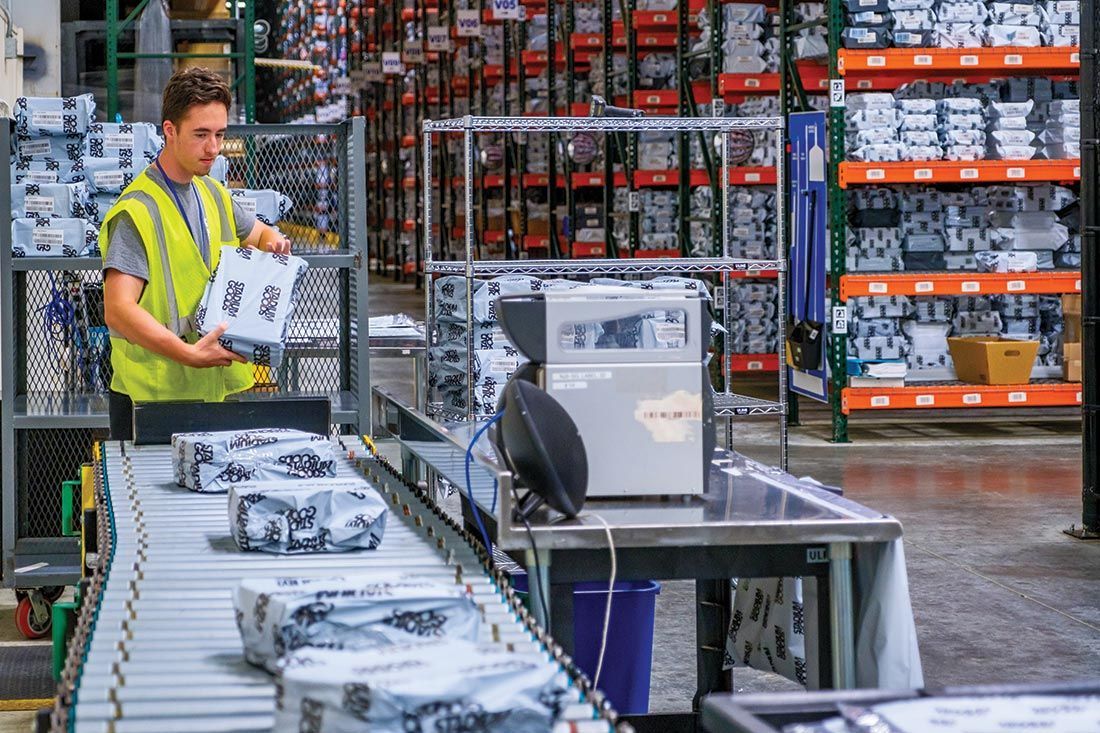
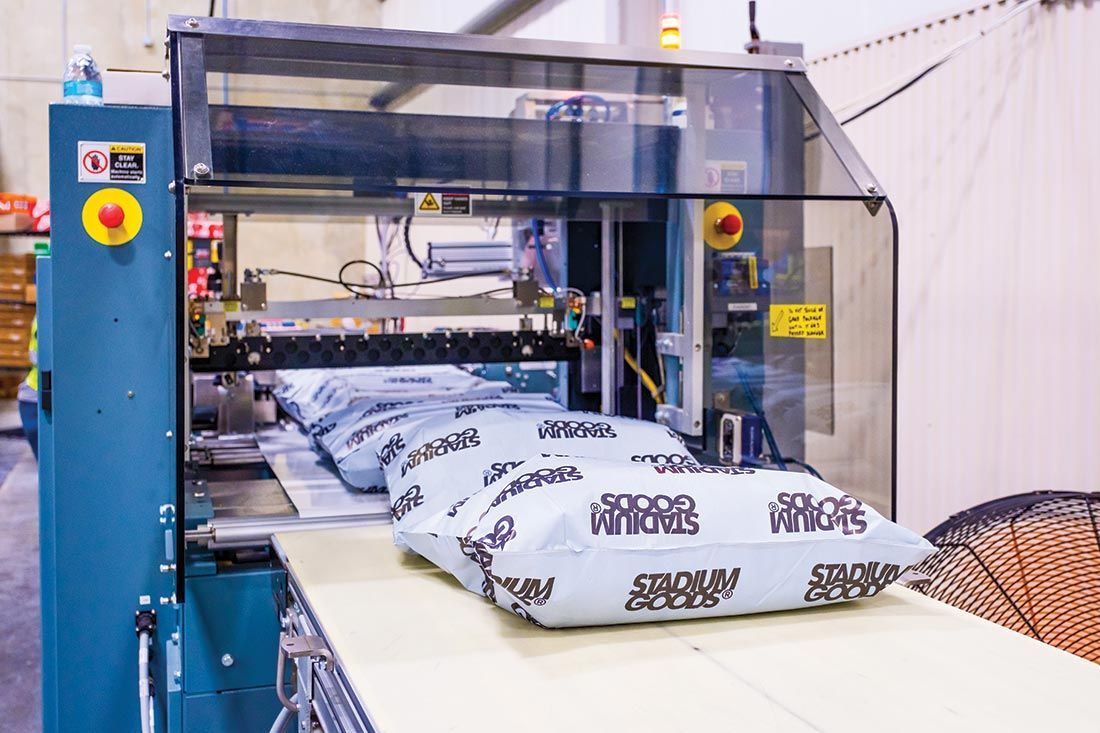
Each case is polybagged at the DC after being authenticated, with a unique LP bar code placed on the bag prior to being placed in very narrow aisle (VNA) storage with selective racking. The site uses a modified auto bagging system with a print-and-apply function (Sealed Air) to automate the process of placing each shoebox into a Stadium Goods branded polybag and applying the LP bar code to it.


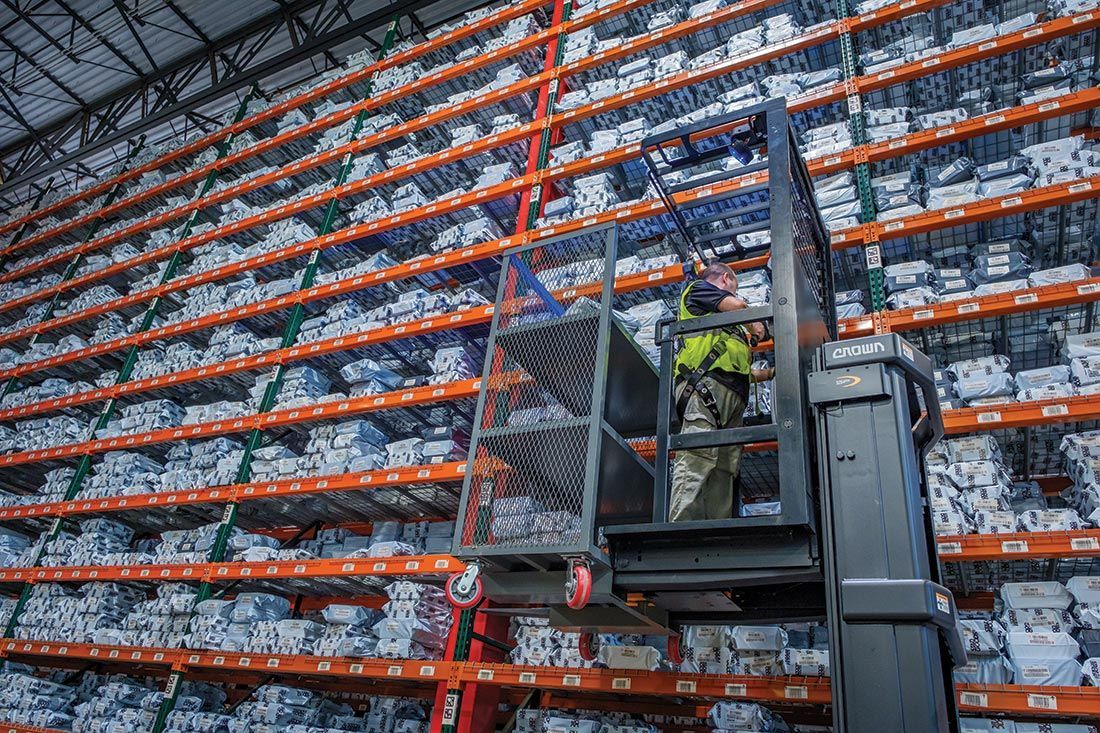
While a small percentage of these unique cases hold a few pairs of shoes or other apparel items, the vast majority of the cases/bags hold one pair of shoes. Usually, the Hillsborough location has close to a half-million pairs of shoes or other unique cases for Stadium Goods stored on the 34 aisles of VNA racking. When it comes time to fill orders, the picking is done from the VNA storage by associates on orderpickers.


The Stadium Goods inventory is ideal for drone inventory monitoring, says Rapoza, since each case is a unique, high-value item that needs to be in the location the WMS indicates it will be in, since there is no handy supply of the same SKU in reserve. High LP accuracy is important for all of Barrett’s clients and processes, Rapoza explains, but for Stadium Goods, it’s a must.


“We run the drones in a handful of facilities for different storage mediums, but for Stadium Goods, we had a unique value proposition for the drones, because the end customer is buying a specific pair of shoes, so the LP accuracy has to be near perfect,” Rapoza says. “If you think about it, we need to pick a specific pair of shoes, and if those shoes aren’t in the exact location where our WMS system says they should be, now you have to go find that case in a sea of a half-million pairs of shoes.”


Before deploying the drone solution, Barrett maintained a high level of LP accuracy for Stadium Goods by manual cycle counting by Barrett’s team of inventory control specialists. Now, however, the drones automate the data capture piece, with one inventory control specialist able to manage each drone flight, rather than needing a whole team of people to go out to periodically scan all the LPs in a section of the VNA storage.


Importantly, adds Rapoza, the drones aren’t only a time saver for the inventory team.


“Yes, the drone solution eliminates the need to have our inventory control associates spend time manually scanning LP labels, but the benefit goes beyond labor savings for that one task,” Rapoza says. “The system helps with customer satisfaction and same-day service levels by supporting the need to get the product out the door accurately and on time. The higher we can make our LP accuracy, the more we are going to improve all our downstream processes.”


Running the drones


“The drone missions are run frequently to capture LP images and data from a predefined section of VNA storage at Hillsborough,” explains Alex Glanzer, operations manager for the site.


There are 34 VNA aisles in total. Each aisle has 26 bays, and each bay has 10 levels of case storage. Typically, one drone mission will scan all the LPs within 10 full bays of one aisle.


Drone flights are usually run during break times or toward the end of a shift when the order picking activity in a section of aisles has ceased or slowed so the aisle can be blocked off with cones and the drone flight can run without worry of interrupting order picking.


One inventory quality control staffer manages each drone mission. A single drone flies autonomously within the aisle once the mission is set up—the associate isn’t working a joystick to fly the unit—but it does require some human oversight to set up and close out a mission. The Hillsborough site keeps two drones on hand, to have one as backup.


Once each drone flight is complete, the Gather AI dashboard highlights any variances against what the mission found, and what Barrett’s WMS says should be in the locations just scanned. In the event there is a variance, it’s investigated and corrected.


Right-sized packaging efficiency


“The CMC system helps us by building boxes around each order to help us reduce the cost of shipping, by having that right-sized carton, while also reducing the manual labor that was previously needed for packing out those orders,” - Rapoza


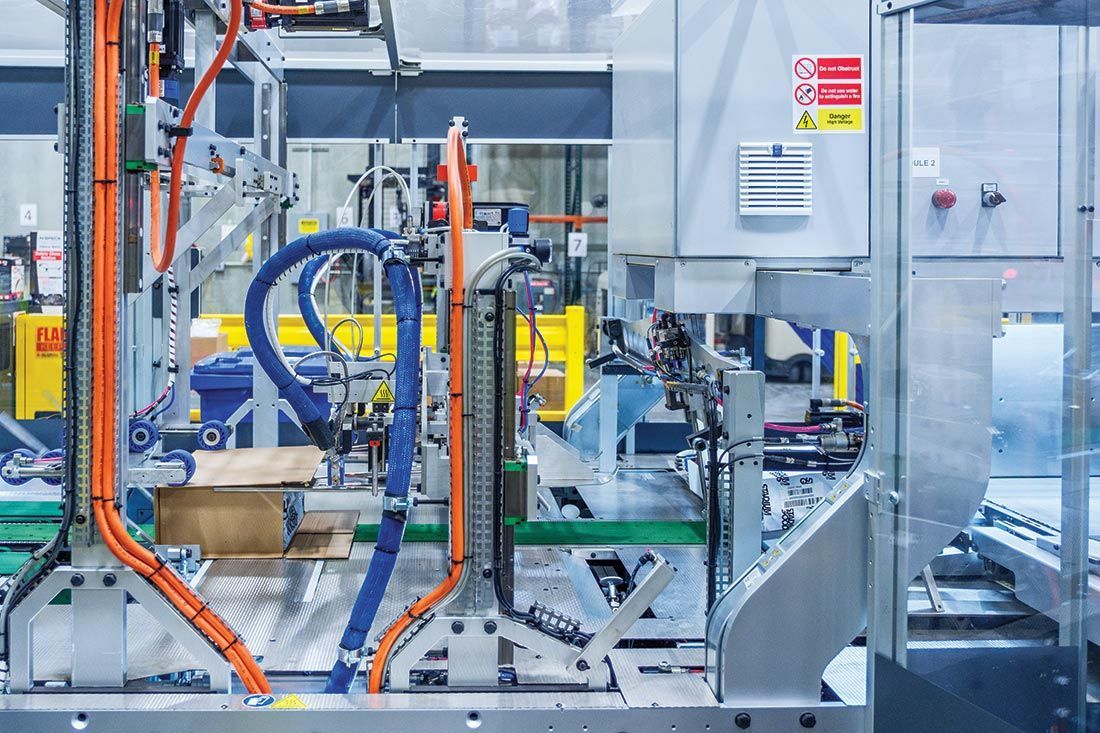
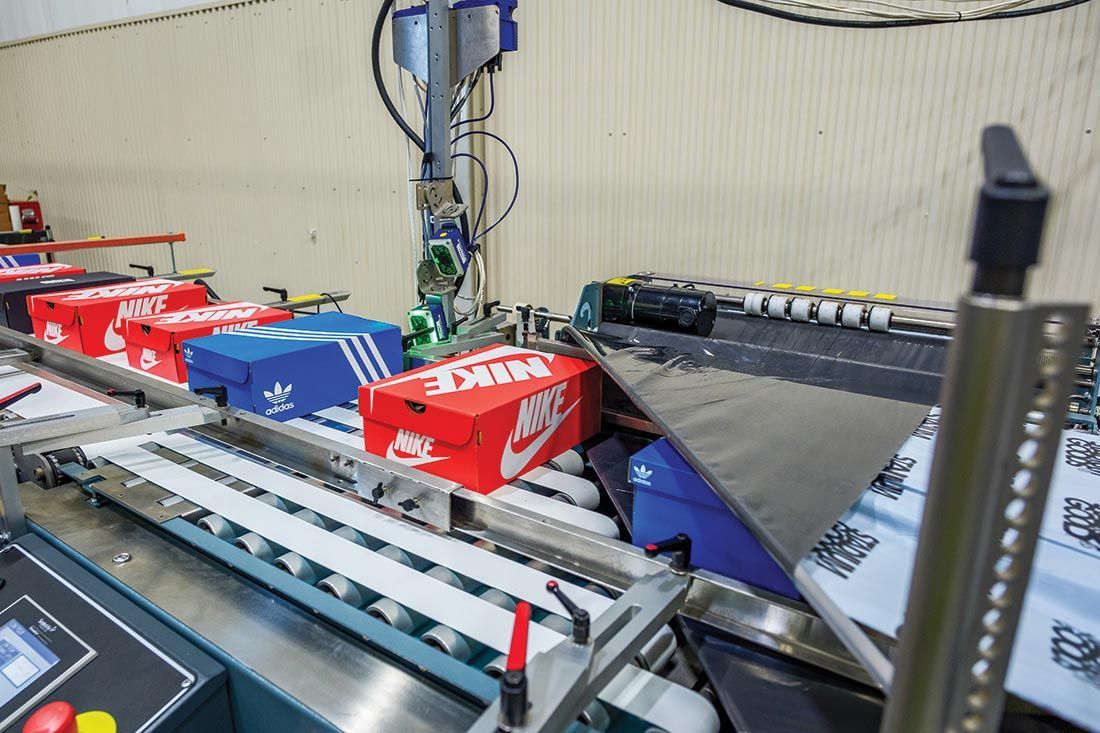
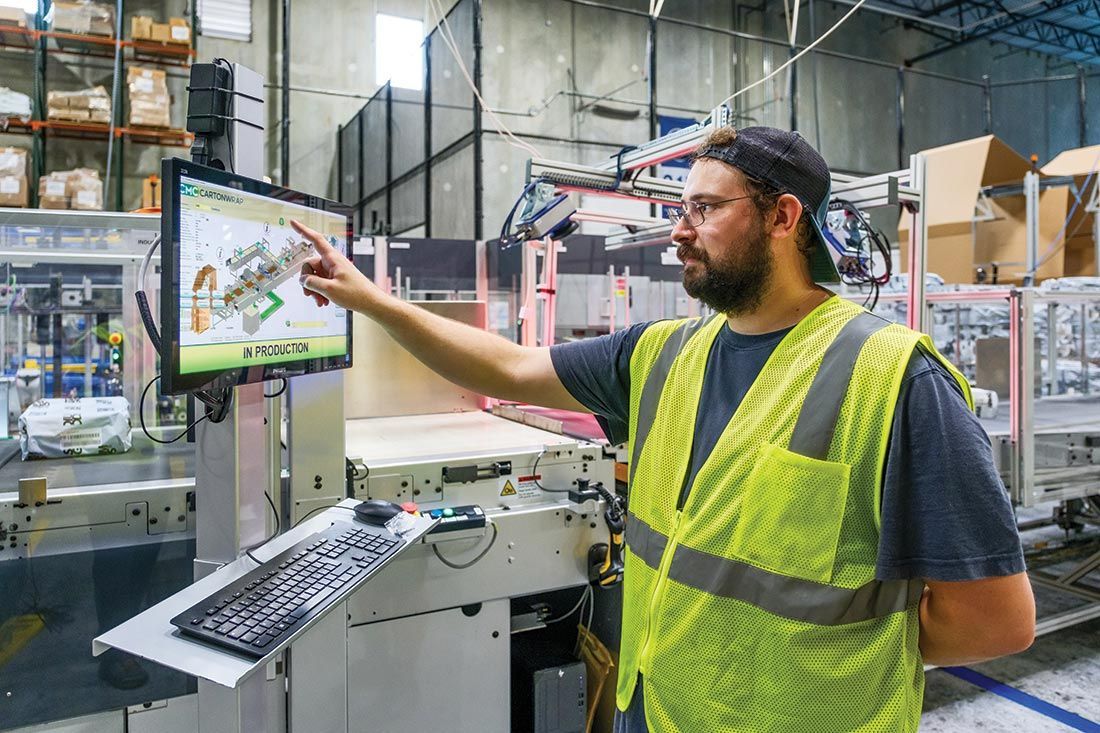
Another way Barrett Distribution Centers is bringing targeted efficiencies to its order fulfillment for Stadium Goods at the Hillsborough, N.J., facility is through packaging automation. Specifically, Barrett deployed an automatic carton packaging system (CMC Packaging Automation) that forms perfectly sized shipping cartons for shoes being fulfilled on behalf of Stadium Goods.


The CMC CartonWrap machine rapidly creates custom shipping cartons from fanfold-fed corrugated cardboard, right-sized to fit around the shoeboxes being shipped to fill single-line orders. The system also automatically applies the shipping label.


Before using the system, packaging single-line orders for Stadium Goods was done using manual pack out stations, with up to 27 stations in use during peak times. Now, except for times of peak order volume, the automation handles the pack out tasks, with 12 pack out stations in reserve for peak times or multi-line orders.


“The CMC system helps us by building boxes around each order to help us reduce the cost of shipping, by having that right-sized carton, while also reducing the manual labor that was previously needed for packing out those orders,” says Rapoza. “There is no direct tie between the drone system and the CMC solution, though ultimately, they are both components of how we are driving down costs while hitting service level agreements through the use of some of these technologies.”


To help reduce the information technology time and effort involved in integrating the right-sized packaging automation system with its WMS, Barrett used an integration software platform (SVT Robotics). Barrett also plans to use the platform to simplify the development of full bi-directional integration between its drone inventory monitoring system and its WMS.


The end result is near perfect LP accuracy for the unique cases held in the VNA storage for Stadium Goods. “The LP accuracy is 99.9% or better, so in practice, we know we have every pair of shoes in the building in the right location, so when it’s time to pick, those shoes are right where they are supposed to be,” says Glanzer. “That level of LP accuracy positively impacts everything we need to do downstream, for the pickers, for the packers, and for getting each shipment on the truck at the right time, to meet the end customer’s delivery expectation.”


Glanzer says the drones have proved valuable for tracking LPs on pallets at Hillsborough for other clients, though the drone monitoring holds especially high value for Stadium Goods. “When it is time to pick, the cases are there literally 100% of the time,” he says. “What makes it so effective is that this case inventory is all unique, with its own LP bar code, readable by a drone in the storage medium.”

Sometimes a drone might return a blurred image, but these can usually be zoomed in on enough to read the LP bar code and determine if the case is in the correct location, says Glanzer.


Another lesson Barrett has learned about the use of drones is that when they are reading LPs on pallets, there should not be excessive pallet overhang, to minimize the risk of a drone striking a pallet. Consistent placement of LP labels helps make the drone system more effective.


Barrett and Gather AI will be working on integration between the drone system’s software and the WMS so variances and count details can flow right into the WMS to simplify the updating of data and creation of any corrective moves. Integration software initially brought on by Barrett to speed up the integration of a right-sized, packaging automation solution with its WMS (see box, page 24), is expected to help with this integration between the Gather AI system and the WMS.


Targeted efficiency


Barrett is selective in how it leverages the drones, adds Rapoza. For example, it isn’t used in typical forward picking areas where a drone would lack a clear line of sight to bar codes, and for which associates already have system-directed manual scan verification steps in WMS to ensure accuracy. But for very efficiently counting LPs on pallets or cases, especially for fast-moving goods or unique cases, the drones are a labor efficient way to take LP accuracy to the next level.


“Our LP cycle count program with the drones is really focused on what moves, instead of counting product that sits there, like a D-level SKU,” says Rapoza. “For those goods, the drone technology allows us to capture LP data much more efficiently, with much fewer labor hours, and with greater accuracy, than what we could do with a manual counting process. It helps achieve higher quality, at a lower cost.”


Read the Full Feature Here

Recent Blog Posts

By Faith Artieda September 11, 2026
When people talk about seasonality in ecommerce, the conversation almost always gravitates toward the holidays. Black Friday arrives, orders climb, warehouses get busier, and brands prepare for what is often considered the most demanding stretch of the year. But not every brand follows the holiday calendar. For a swimwear company, summer might be the busiest period of the year. An apparel brand could experience significant demand around a product launch or seasonal collection. Other businesses may see sharp increases tied to promotions, retailer orders, or events that have very little to do with November and December. For Harrison Smith, Director of Commercial Revenue at Barrett Distribution Centers, understanding those patterns is an important part of understanding the business itself. “When I work with brands, I wanna understand everything about the business,” Harrison explained. Every Brand Has Its Own Rhythm Harrison has spent about 20 years in the 3PL industry and has been with Barrett for roughly four and a half years. His role touches pricing, transportation, new business, and existing customer relationships, which means much of his work begins with understanding how a company actually operates. That includes looking beyond annual order totals. “I wanna understand everything about the business,” Harrison said. “It’s looking at yearly trends, looking at within the year, what does that look like? Do you have those peaks?” Those peaks tell a story. A brand might look relatively consistent when viewed across an entire year, but a closer look could reveal several weeks when order volume changes dramatically. Understanding when those moments occur can influence when inventory needs to arrive and what the fulfillment operation needs to be prepared to handle. As Harrison puts it, “ When do you need to bring your inventory in to service that holiday peak, or is it a summer peak because you sell swimsuits or whatever it might be?” The important part is not whether your peak happens during the holidays. It is whether you and your fulfillment partner understand when it happens and what it means for your business. Better Data Creates a Clearer Picture Seasonality is also one of the reasons Barrett asks brands for detailed information during the pricing and solutions process. Order history, inventory patterns, volume changes, and previous peaks help paint a much clearer picture than an annual average ever could. The more complete that picture becomes, the easier it is to understand what supporting the brand will actually require. “The better the data, the better our pricing,” Harrison explained. When information is incomplete, assumptions have to fill the gaps. Harrison notes that those assumptions naturally tend to be conservative because a 3PL has to prepare for what the operation might require. Better information allows the conversation to become much more specific to the business in front of you. That is why understanding your own seasonality matters before you ever reach the busiest week of your year. Plan Around Your Peak, Not Everyone Else’s Peak season should not be defined by the calendar. It should be defined by your customers. For some brands, that means preparing for the holidays. For others, the most important months could arrive much earlier. What matters is recognizing those patterns early enough to prepare inventory and have meaningful conversations with the people responsible for fulfilling your orders. At Barrett, that starts with curiosity about the individual business rather than assuming every customer behaves the same way. Because your busiest season does not have to be Q4 to deserve a plan. Whenever your customers are ready to buy, your fulfillment operation should be ready for them.
September 10, 2026
Choosing a 3PL often begins with a salesperson, a proposal, and a long list of capabilities. There are conversations about locations, technology, pricing, order volume, integrations, and everything your business might need as it grows. Those conversations are important, but they introduce you to only one part of the company you may eventually trust with your products and your customers. Once inventory arrives, the relationship becomes much bigger. There are general managers overseeing the facility, operations teams making decisions every day, systems experts supporting technology, and employees receiving, picking, packing, and shipping your products. These are the people who will learn the nuances of your business and work through the unexpected moments that inevitably come with growth. Bryan Corbett understands that distinction from both sides of the relationship. Before joining Barrett Distribution Centers, Bryan spent years as an entrepreneur running businesses that managed their own warehousing and fulfillment. He remembers unloading trucks with pallet jacks, operating his own warehouse, managing picking, and building fulfillment processes firsthand. After roughly 15 years as an entrepreneur, he moved into contract logistics, eventually joining Barrett, where he now works across sales and marketing. At the time of the conversation, Bryan had been with Barrett for about four and a half years. That operating background influences the way he approaches sales today. He knows that the person presenting the solution is only one piece of a much larger relationship. “You want to meet a good set of experts from every team because this is your supply chain. This is your company,” Bryan explained. And when you think about what a brand is actually handing over to a 3PL, that point becomes difficult to ignore. Get Beyond the Sales Conversation There is nothing wrong with having a great salesperson. That person can become an important advocate for your business and a valuable part of the relationship. But the salesperson will not be the only person responsible for delivering what was promised. Bryan is a salesperson himself, and he is remarkably straightforward about that reality. “I’m a salesperson,” he said. “So I need to know I can’t just say because I know operations.” His approach is to bring other Barrett experts into the conversation so prospective customers can hear directly from the people who understand different parts of the business. When asked about potential red flags brands should watch for when selecting a fulfillment provider, one of the first things Bryan mentioned was “not being encouraged to broadly meet larger teams besides the sales guy.” That is an important distinction because a polished sales presentation can tell you what a company is capable of doing. Meeting the people behind that presentation can help you understand what working with the company might actually feel like. Before choosing a 3PL, brands should have opportunities to: Meet facility leadership and understand who will ultimately be responsible for the building where their products are handled. Talk with operations teams about the realities and unique requirements of their business. Understand the systems support available when technology, integrations, or data questions arise. Walk the warehouse and see the environment where their inventory could eventually live. Ask who will be involved when something unexpected happens and how communication will work. Pay attention to the people and culture because those relationships will matter long after the proposal is signed. You are not trying to collect another round of rehearsed answers. You are trying to understand whether the expertise promised during the sales process actually exists throughout the organization. Walk the Building Before Your Inventory Does Bryan also believes brands should see the operation for themselves. When discussing red flags, he specifically mentioned “not doing site” visits alongside receiving prices too quickly and failing to meet the broader operations team. A warehouse tour gives a brand something a presentation cannot fully recreate. You can see how the facility operates, watch how people interact, ask questions in the environment where the work actually happens, and begin meeting the people who could eventually become responsible for your business. Bryan shared a piece of advice from a former colleague that has stayed with him: “You’re only as good as the GM in your building.” The point is not that buildings, systems, and technology are unimportant. They matter tremendously. But ultimately, people still make decisions, solve problems, communicate with customers, and determine how well those resources are used. Bryan sees that same principle within Barrett. When talking about what he enjoys most about the company, he repeatedly returns to the people around him. “Work should be fun,” he said. “You should be able to be yourself, have an opinion, have a view, have a point of view.” That sense of openness matters externally too, especially when a customer needs an answer that is more complicated than yes. A Good Partner Will Not Always Tell You What You Want to Hear One of the more revealing things Bryan says in the conversation has nothing to do with warehouse size, technology, or shipping speed. “We’ll tell you if you don’t need us.” For a sales leader, that is a meaningful statement. Bryan explains that Barrett says no to business when the fit is not right. Sometimes a company may not need a 3PL yet. Sometimes another provider may be better suited to what the business requires. For Bryan, forcing a relationship simply to win the business undermines the trust that a long term partnership eventually requires. “You show your expertise through your honesty and your trustworthiness. You can’t separate the two,” he said. That philosophy also means accepting that neither side will be perfect. Bryan is candid about mistakes and the realities of long term customer relationships. “Sometimes the customer’s not always right. And sometimes Barrett’s not always right. Sometimes we make mistakes.” The goal is not to pretend problems will never occur. It is to create enough trust between the people involved that when something does happen, everyone can communicate honestly, respond quickly, and work toward the same outcome. You Cannot Fake a Partnership The word partner appears constantly in the 3PL industry. Bryan believes the relationship behind that word has to be genuine. “You can’t fake it.” He talks about developing relationships with customers over months and years, learning about their companies, understanding what matters to their teams, and eventually reaching a point where the relationship becomes much more personal than inventory sitting inside a warehouse. That same philosophy influences the way Barrett talks about its customers publicly. Rather than making every story about Barrett, Bryan believes some of the strongest marketing comes from elevating the brands Barrett serves and allowing their success to speak for the relationship. He has seen something similar happen inside the warehouse. “I’ve seen our operators develop next level relationships with the clients,” Bryan said, explaining that those connections help “humanize the relationship.” The products stop being anonymous units moving through a building. There are people behind them. There is a business trying to grow, employees depending on its success, customers waiting for their orders, and a reputation attached to every package that leaves the facility. That understanding can change the way people approach the work. Meet the People Behind the Promise A 3PL can have impressive buildings, sophisticated technology, competitive pricing, and an extensive list of capabilities. Those things deserve careful consideration. But you are ultimately trusting people to use them well. Bryan perhaps summarizes that idea best when he talks about what successful sales relationships require: “People don’t buy from fake. You can’t speak like a robot. You have to know what you’re talking about. You have to be a human being.” Before choosing a 3PL, meet those human beings. Walk the facility. Meet the general manager. Talk with operations. Ask questions that go beyond pricing and square footage. Find out who will answer the phone when something unexpected happens and whether the people in the building understand what your products represent to your business. Because once the sales process is over, those are the people who will help turn the promises in the proposal into your customer's everyday experience.
By Faith Artieda September 9, 2026
FRANKLIN, Mass., July 29, 2026 — Barrett Distribution Centers, a trusted third-party logistics (3PL) provider specializing in omnichannel fulfillment, announced a new partnership with Kindthread , a leading healthcare apparel company known for its portfolio of trusted medical scrub and workwear brands. "Finding the right fulfillment partner was one of the most important decisions we had to make," said Jamie Bailey , senior director of logistics at Kindthread. "From our first conversations, Barrett showed they understood our business and the complexity of supporting both wholesale and direct-to-consumer fulfillment. Their team was responsive, easy to work with and focused on finding solutions every step of the way. That gave us confidence we had the right partner for this transition." Kindthread selected Barrett to rapidly transition its B2B, retail, and direct-to-consumer fulfillment operations from Mexico to the U.S. following changes to Section 321 de minimis regulations. Leveraging its Olive Branch, Tennessee campus and a fast-track implementation approach, Barrett onboarded more than 100 truckloads of inventory and launched custom embroidery services to support personalized orders. "Kindthread has an aggressive growth strategy that aligns extremely well with Barrett's capabilities and long-term vision," said Scott Wilkins , vice president of customer solutions. "Given the short implementation window, establishing trust and maintaining clear communication from the very beginning was critical. Both organizations worked tirelessly to meet key milestones while minimizing disruption to Kindthread's customers. We sincerely appreciate the confidence Kindthread placed in Barrett and look forward to building a successful partnership for many years to come." The partnership positions Kindthread for continued growth while providing the operational flexibility needed to support evolving customer demand across multiple sales channels. About Kindthread At Kindthread, we don’t just make scrubs; we make your new favorite uniform. Every stitch, seam, and pocket has a job to do, and they take it seriously. From fabrics that move with you to thoughtful features that make those long shifts feel a little lighter, we’ve got your back (and front). Carefully crafted for the folks who give their all to care for others, blending innovative design, durability, and comfort into pieces that won't let you down. About Barrett Distribution Centers Since 1941, Barrett has provided customized third-party logistics (3PL), direct-to-consumer (DTC) eCommerce fulfillment, omnichannel distribution, managed transportation solutions and retail compliance for clients across all industries, with a focus on apparel & footwear, health & beauty, consumer packaged goods (CPG) and education. Barrett continues to be a leading 3rd party logistics provider in North America, known for superior execution, customer engagement and direct access to senior leadership decision makers. As a member of Inc's fastest growing companies list 15+ times, Barrett is big enough to do the job and still small enough to deeply care about your business. Brands interested in a new 3PL partnership may contact Barrett directly here . Media Contact: Faith Artieda Marketing Content Specialist faith.artieda@barrettdistribution.com
More Posts