What Should Your First 30 Days With a New 3PL Look Like?

Faith Artieda • September 23, 2026

The contract is signed. Your inventory is moving. Systems are being connected. After months of comparing providers and talking through every detail, your new 3PL relationship is finally becoming real.


The first 30 days should not be about handing over the keys and hoping everything works. They should be about turning everything discussed during the sales process into something your customers can actually rely on.


Scott Wilkins, Vice President of Customer Solutions at Barrett Distribution Centers, has described implementation as an important moment in establishing that relationship.


“The implementation itself really sets the stage for that relationship. The more information that you have up front, the better off that relationship is going to get off on the right foot.”


So, what should those first few weeks actually look like?


Week One: Get Everyone on the Same Page


The beginning should involve a lot of communication.


Your 3PL needs to understand more than how many orders you ship. This is the time to confirm inventory details, sales channels, packaging requirements, retailer expectations, technology needs, transportation requirements, upcoming promotions, and the small details that make your business different.


You should also know the people involved. Who is your main contact? Who is responsible for operations? Who handles systems questions? Who gets involved when something unexpected happens?

Scott describes the work behind building a customer solution as a team effort, saying,


“It takes a small army to develop and submit a potential proposal.”


That collaboration becomes even more important once the proposal turns into a real operation.


Weeks Two and Three: Turn the Plan Into an Operation


This is where a lot of the behind the scenes work happens.
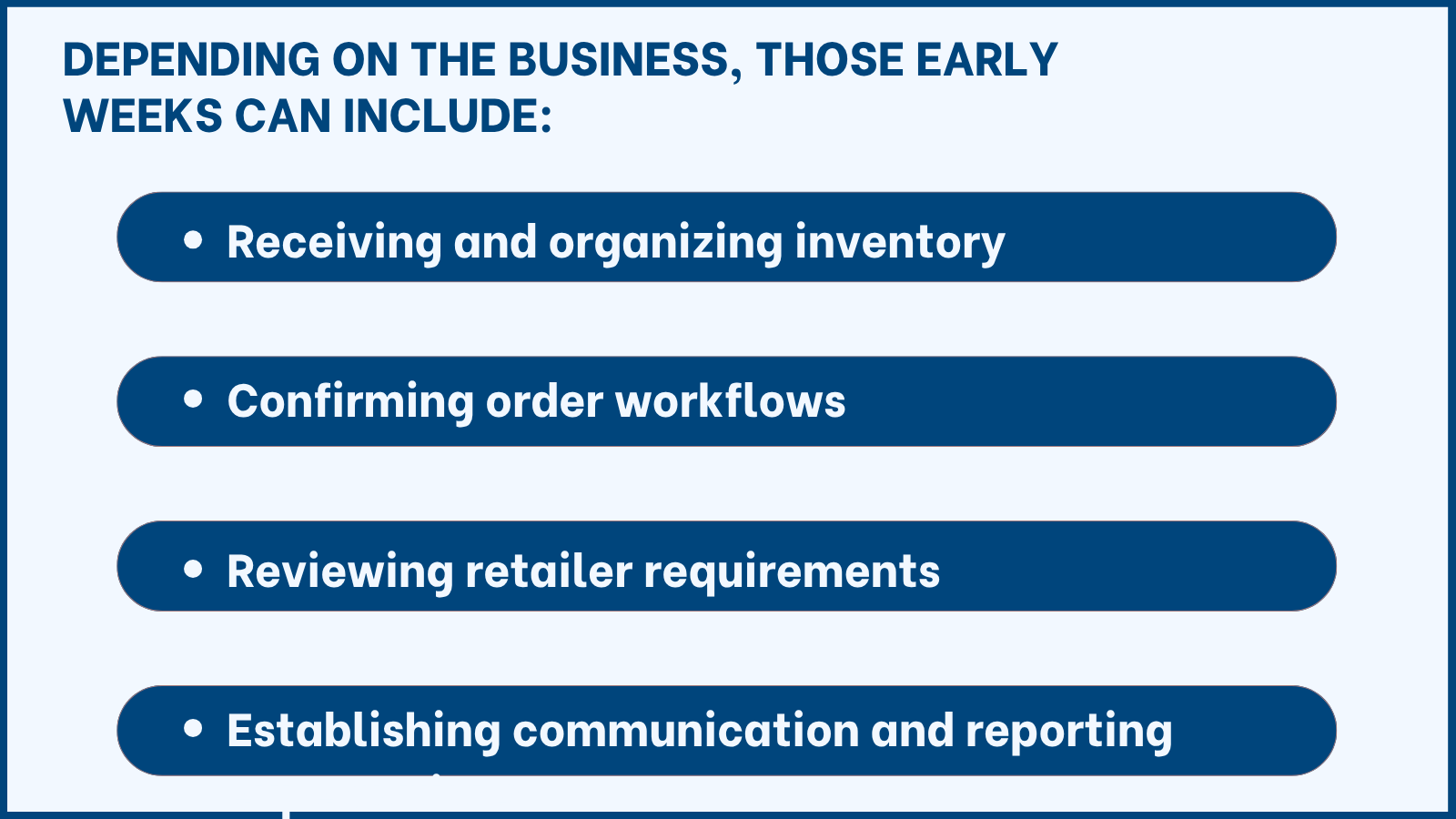
This is also when questions are valuable. Something that sounded straightforward during a sales call may look different once inventory is physically in the building. The goal should be to identify those details now, not after thousands of customer orders are moving through the operation.


Week Four: Learn From Real Orders


Once orders begin shipping, the relationship enters a new stage.


The first few weeks of live fulfillment give both teams an opportunity to see the plan in action. Are orders flowing as expected? Are packaging instructions clear? Are systems communicating correctly? Is there anything the teams could handle differently?


Not every adjustment means something went wrong. Sometimes you simply learn more about a business once you start doing the work.

Scott has said that Barrett's approach begins with “always be listening.” The more a 3PL understands a customer's pain points, direction, and business plan, the better it can shape the solution around what that customer actually needs.


That listening should not stop after the contract is signed.


By Day 30, You Should Feel Like a Team


Thirty days is not enough time to encounter every scenario your business will face with a new 3PL. It is enough time to establish how the relationship will work when those scenarios eventually arrive.


At Barrett, onboarding brings together the people needed to translate a proposed solution into an everyday operation. Scott puts it simply:

 “We customize every solution that we work on.”


That means the first month is not just about getting inventory onto shelves and orders out the door. It is about learning how two teams communicate, solve problems, and work together.


By day 30, you should not simply feel like you moved into a new warehouse. You should feel like you gained a partner who is beginning to know your business.

Recent Blog Posts
By Faith Artieda September 22, 2026
Signing with a 3PL can feel like the finish line after weeks of conversations, proposals, pricing, and warehouse visits. But the signature is really where the relationship begins. Before your first customer order leaves the building, your 3PL needs to turn everything discussed during the sales process into an operation that works for your brand every day. That transition matters. A good onboarding should make you feel more confident about the decision you just made, not leave you wondering what happens next. First, Your 3PL Gets to Know the Details During the sales process, your 3PL learns the larger story of your business. Once you sign, the questions become much more specific. What does your inventory look like? When are your busiest periods? How are orders received? Do certain products need special handling? Are there retailer requirements to follow? Do orders include branded packaging, inserts, kits, gift messages, or other details? This is where conversations become processes. Your team and your 3PL begin working through the information needed to build an operation around how your business actually functions. Then the Behind the Scenes Work Begins There is a lot happening before the first order ships. Systems need to communicate, inventory needs a home, and the people inside the warehouse need to understand what makes your business different.
By Faith Artieda September 21, 2026
You have talked with sales. You have reviewed the proposal. The pricing makes sense, the technology checks the right boxes, and the warehouse looks like it could support your business. Before you sign, there is another question worth asking: Who will actually be taking care of my business once the sales process is over? A 3PL relationship can last for years. The people you meet during the sales process are only the beginning. Your products will eventually be in the hands of facility leadership, operations teams, systems experts, warehouse associates, and others making decisions about your business every day. You should know some of those people before you become a customer. Start With the People Running the Building If possible, meet the general manager and members of the operations team at the facility where your inventory will live. These are the people who will learn the details of your business. They will be involved when volume suddenly increases, inventory arrives differently than expected, a retailer introduces a new requirement, or your team comes to them with something new. Bryan, who works across sales and marketing at Barrett Distribution Centers, recently discussed this on the Behind the Docks podcast. 
By Faith Artieda September 18, 2026
A polished presentation can tell you what a 3PL promises to do. A warehouse visit gives you the chance to see what happens when those promises become real. If you are trusting a 3PL with your inventory, your orders, and ultimately part of your customer experience, visiting the facility can be one of the most valuable steps in the selection process. You get to move beyond the proposal and see the people and environment that could soon become an extension of your business. See Beyond the Sales Presentation Most 3PL conversations begin with capabilities. You will hear about locations, technology, fulfillment services, integrations, pricing, and experience. All of that information matters, but there are certain things that are difficult to understand from a presentation alone. Walking through a warehouse gives you a different perspective. Look at how inventory is organized. Watch how orders move through the building. Pay attention to how the team communicates and how employees interact with one another. Ask how the facility handles busy periods, unusual requests, and unexpected changes. You are not looking for a perfect warehouse. You are trying to understand how the operation works and whether you can picture your brand becoming part of it. Barrett's Bryan has identified “not doing site visits” and “not being encouraged to broadly meet larger teams besides the sales guy” as potential red flags when choosing a 3PL. Meet the People Who Will Know Your Business The salesperson may introduce you to the company, but they will not be the only person responsible for your experience once inventory arrives. That is why a warehouse visit should include conversations with the people who would actually support your business. Meet the general manager. Talk with operations. Ask about systems support and onboarding. Learn who you would contact when something unexpected happens. As Bryan explains, “You want to meet a good set of experts from every team because this is your supply chain. This is your company.” Those introductions matter because a strong 3PL relationship eventually becomes much more personal than a contract. When your volume suddenly increases, a retailer changes a requirement, or an inventory issue appears, you want to know there are people on the other side who understand your business and can work through the situation with you. Ask Questions You Cannot Answer From a Rate Sheet A site visit is also your opportunity to get curious. Ask how the team prepares for peak season. Find out what happens when order volume exceeds the forecast. Ask how inventory discrepancies are handled or how special projects fit into the normal flow of the building. If your brand requires custom packaging, kitting, retail compliance, gift messaging, or other details, talk about how those requirements would work in the actual facility. You can also ask about the building itself. Different facilities may have different strengths, teams, and experience. The goal is not simply finding out whether a 3PL has space available. It is understanding why this particular operation makes sense for your business. Pay Attention to the Culture Numbers are easier to compare than culture, but culture can have a tremendous influence on your experience with a 3PL. Notice how people speak to one another. Does the team seem comfortable asking questions? Are the people leading the tour familiar with what is happening on the floor? Do employees appear engaged with the work around them? Bryan describes Barrett as a place where people should be able to “be yourself, have an opinion, have a view, have a point of view.” Those qualities can be difficult to capture in an RFP. They are much easier to notice when you are standing inside the operation. Walk It Before Your Inventory Does Choosing a 3PL is not simply a decision about where your products will sit. You are choosing the people who may receive your inventory, solve problems, prepare orders, support your growth, and help deliver the experience your customers associate with your brand. At Barrett Distribution Centers, we encourage brands to get to know the people and operations behind the solution. A warehouse visit creates room for questions, conversations, and a clearer understanding of how the partnership could work once the sales process ends and the everyday work begins. So before your inventory arrives, walk the floor yourself. Meet the people. See the operation. Ask the questions. Your products may spend years inside that building, so it is worth knowing who and what will be waiting for them.
More Posts