
Best Warehouse Location for Fast Shipping (2026)

Faith Artieda • October 12, 2026

The best warehouse location for fast shipping is one that places inventory close to customers, major transportation networks, and key distribution markets.


Strategic warehouse placement can help reduce shipping distances, improve delivery efficiency, and support reliable order fulfillment.


For brands shipping nationwide, partnering with a 3PL like Barrett Distribution can provide access to multiple warehouse locations and the technology needed to support an effective distribution strategy.


Key Takeaways
  • Warehouse location directly influences shipping distances and delivery times.
  • Customer geography should guide inventory placement decisions.
  • Access to major highways, parcel carriers, and ports can support distribution efficiency.
  • A multi-location 3PL network can help brands position inventory closer to customers.


Why Does Warehouse Location Matter for Shipping Speed?

Shipping speed depends partly on how far an order must travel from the warehouse to its destination.


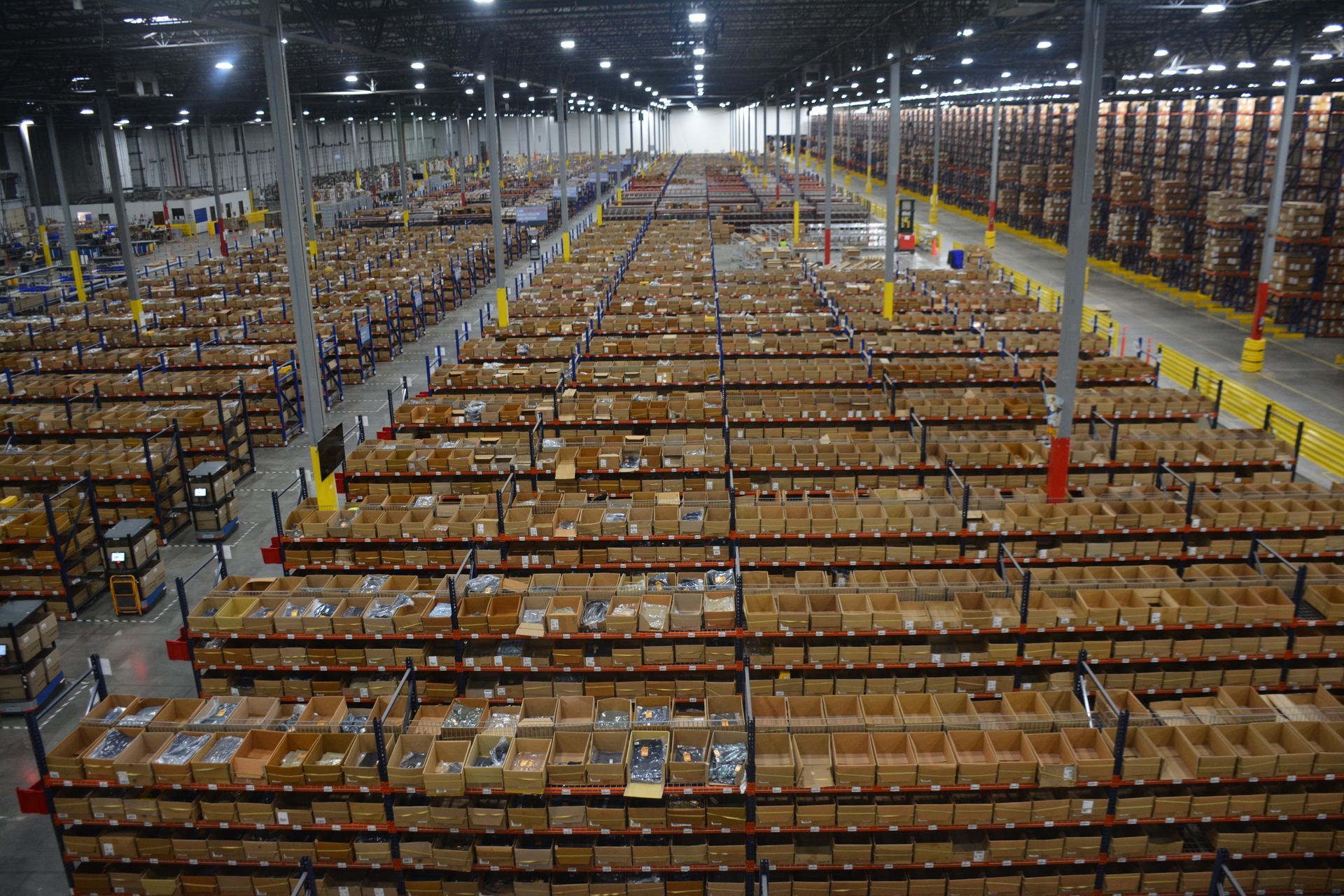
A strategically located fulfillment center can reduce transportation distances and help brands serve customers more efficiently.


However, location alone does not guarantee faster delivery. Inventory availability, warehouse processing, carrier selection, and transportation planning also influence shipping performance.


Which Warehouse Locations Are Best for Fast Shipping?

The best locations depend on where a brand's customers are concentrated.


For businesses serving the Northeast, warehouses in Massachusetts, New Jersey, or New York may provide strategic access to regional customers. Maryland and Virginia can support Mid-Atlantic distribution, while Tennessee and Texas may be useful locations within broader national fulfillment networks.


West Coast operations in California can also support brands serving customers in that region.


Barrett operates facilities across these markets, giving brands multiple options when developing their warehouse and distribution strategies.


Is One Warehouse or Multiple Warehouses Better?

A single warehouse can simplify inventory management and operations, especially for brands with concentrated customer demand.


However, companies shipping across the country may benefit from multiple fulfillment locations. Distributing inventory across strategically selected warehouses can reduce the distance orders travel and create additional flexibility.


The right approach depends on order volume, customer geography, inventory requirements, and transportation costs.


How Does Transportation Access Affect Delivery Times?

Warehouse proximity to transportation infrastructure can influence how efficiently products move through the supply chain.


Access to major highways, parcel carrier networks, and ports can support both inbound inventory movement and outbound distribution.


For example, Barrett's Curtis Bay, Maryland facility is located within 10 miles of the Port of Baltimore and nearby FedEx and UPS hubs, providing access to important transportation infrastructure.


How Can a 3PL Help Improve Shipping Speed?

A 3PL can help brands evaluate warehouse locations while coordinating inventory management, fulfillment operations, and transportation.


Barrett combines B2B and B2C omnichannel fulfillment, warehouse technology, inventory visibility, transportation management, and operational analytics to support efficient distribution.


Its national warehouse network also provides flexibility for brands evaluating where inventory should be positioned as their businesses grow.


Frequently Asked Questions

Where should an ecommerce warehouse be located?

An ecommerce warehouse should be located based on customer demand, transportation access, inventory requirements, and the brand's overall distribution strategy.


Can multiple warehouses improve delivery times?

Yes. Positioning inventory across multiple warehouses can shorten shipping distances for some orders, depending on inventory availability and customer locations.


Is a warehouse near a major city better for fast shipping?

It can be beneficial when a significant portion of customers are located in or near that market. However, transportation access, costs, and operational capabilities should also be considered.


Does Barrett have warehouses across the United States?

Yes. Barrett operates a national network of fulfillment and distribution facilities across multiple U.S. markets.

Recent Blog Posts
By Faith Artieda • October 12, 2026
When people picture a third-party logistics operation, the warehouse usually comes to mind first. Forklifts maneuver between towering racks, associates prepare orders, and packages make their way toward waiting trucks. It's a familiar image, and an important one. Yet some of the most consequential work in fulfillment happens far from the warehouse floor. Behind every successful distribution operation is a network of professionals coordinating customer relationships, analyzing data, managing technology, planning transportation, and anticipating the needs of the brands they serve. Their contributions may be less visible, but they are woven into nearly every order that leaves the building. The Work You Don't Always See Consider everything that happens before an order reaches a warehouse associate. Technology teams help maintain the connections between ecommerce platforms, inventory systems, and fulfillment operations. Transportation specialists examine shipping options and distribution costs. Finance and commercial teams develop pricing structures that reflect the realities of each customer's business. Meanwhile, customer support professionals manage the steady exchange of information that keeps brands informed and their operations aligned. At Barrett Distribution Centers, these functions work alongside warehouse teams to support a fulfillment experience that extends well beyond picking, packing, and shipping. Each department brings a different perspective, and their coordination becomes particularly valuable when a brand introduces new products, expands into retail, or encounters unexpected demand. Relationships Require People, Not Just Processes For Adam Robertson , Barrett's Vice President of Customer Experience, supporting customers begins with establishing genuine accountability.  “When a customer reaches out to us, they only need to reach out once and they know we will own the issue.” That principle guides Barrett's One Call Resolution approach, which has been introduced to more than 200 employees. Customer service, however, reaches beyond the individuals answering emails or participating in meetings. A request may require input from inventory specialists, technology professionals, warehouse leadership, or other departments before a solution can be implemented. Through that collaboration, customers gain access to the collective expertise of the organization rather than relying on a single point of contact to have every answer. A Fulfillment Partnership Takes an Entire Team As brands grow, the demands placed on their distribution partners become increasingly sophisticated. New retail relationships introduce unfamiliar requirements, changing order patterns call for thoughtful planning, and evolving technology creates opportunities for greater visibility. Meeting those demands requires people who understand how individual decisions influence the larger operation. The associates working inside a distribution center remain essential to Barrett's success. Alongside them, office-based professionals contribute the analysis, communication, coordination, and judgment that allow fulfillment operations to function cohesively. Their work rarely appears in an unboxing video or a photograph of a busy warehouse. Customers experience its impact nonetheless, through clear communication, informed decisions, and dependable execution. A warehouse moves the products. The people throughout the organization help move the business forward. Looking for a 3PL that takes the time to understand your business? Start a conversation with Barrett Distribution Centers.
By Faith Artieda • October 9, 2026
A competitive fulfillment quote can be persuasive, particularly when rising expenses are putting pressure on margins. But the true cost of a third-party logistics partnership rarely becomes apparent during the proposal stage. It reveals itself through everyday execution, unexpected charges, retailer requirements, and the provider's ability to accommodate a growing business. Choosing a 3PL based primarily on price can deliver immediate savings while introducing considerably greater expenses down the road. When Lower Rates Come With Hidden Costs Comparing fulfillment proposals requires more scrutiny than examining storage and handling rates. Pricing structures vary, and seemingly minor differences can accumulate as order volumes increase or distribution requirements evolve. Dan Klenkar of Barrett Distribution Centers cautions brands against making price the deciding factor. “Anyone who typically chooses to pick the lowest cost provider is gonna be making a change before they know it because they didn't dig into all the details.” A warehouse may offer attractive rates but lack experience with complex retailer requirements. Another provider might quote inexpensive storage while introducing additional charges for specialized handling or seasonal fluctuations. Once inventory has been transferred and operations are underway, discovering those limitations becomes considerably more expensive. Look Beyond the Warehouse Invoice Fulfillment costs extend across the entire supply chain, from inbound transportation and inventory storage to order processing and final delivery. Klenkar emphasizes the importance of evaluating “the entire supply chain from source to delivery” rather than concentrating on one expense. Consider a warehouse with exceptionally low storage rates but a location that increases transportation distances. The initial savings may gradually disappear into higher shipping costs. Equally important is pricing transparency. Klenkar identifies clear expectations as a cornerstone of effective 3PL relationships, advocating for
By Faith Artieda • October 8, 2026
In logistics, problems rarely arrive at convenient moments. A shipment requires clarification, an order needs attention, or a customer discovers an inconsistency that cannot afford to linger. What follows often reveals more about a third-party logistics provider than months of uninterrupted fulfillment. The characterization is not necessarily whether something goes wrong. Even experienced operations encounter unexpected circumstances. What separates a dependable fulfillment partner from a frustrating one is the willingness to assume responsibility when an issue surfaces. At Barrett Distribution Centers, that philosophy has a name: One Call Resolution. Accountability Should Not Require a Follow-Up Few experiences erode confidence faster than repeatedly explaining the same problem to different people. An initial inquiry becomes another email, another conversation, and eventually another responsibility competing for the customer's attention. For brands entrusting their inventory and customer relationships to a 3PL, those exchanges carry consequences beyond inconvenience. Every unresolved concern consumes time that could otherwise be devoted to merchandising, product development, or pursuing the next opportunity. Adam Robertson , Barrett's Vice President of Customer Experience, describes a fundamentally different expectation. “When a customer reaches out to us, they only need to reach out once and they know we will own the issue.” The concept does not promise that every situation will be resolved immediately. Some matters require investigation, coordination, or additional communication. Instead, One Call Resolution establishes something more enduring: once Barrett receives a concern, the responsibility for pursuing a resolution belongs to Barrett. Customers should participate in resolving important issues without having to become the people managing the resolution itself. Service Is a Company-Wide Responsibility Although customer experience is frequently associated with account managers and support representatives, fulfillment performance depends on people throughout the organization. A warehouse associate identifying an inventory discrepancy, a supervisor responding to an unexpected request, or a technology specialist investigating an integration concern can all influence the quality of a customer's experience. Recognizing that interconnected responsibility, Barrett has trained more than 200 employees in its One Call Resolution philosophy, extending the principle beyond customer-facing positions. Robertson emphasizes the importance of making customers feel that Barrett is “not only responsive, but we're extremely accountable.” Responsiveness initiates the conversation. Accountability determines what happens afterward. A prompt acknowledgment has limited value when the underlying concern remains unresolved. Meaningful service requires someone to carry the issue forward, coordinate the necessary resources, and remain engaged until there is a satisfactory outcome. Listening Is Only Valuable When Something Changes An organization can sincerely welcome customer feedback and still fail to act on it. Surveys may produce impressive reports, while recurring frustrations quietly persist. Barrett approaches feedback as an ongoing responsibility rather than an occasional measurement exercise. According to Robertson, the company conducts customer surveys twice annually and reviews the findings across its management and operational teams. Critical feedback becomes a documented case that remains open until the identified concern has been addressed.  If a customer requests improved reporting, for example, that feedback is not simply recorded as an observation. It becomes an item requiring follow-through. This approach reflects a broader understanding of customer relationships. Expectations change as brands introduce products, expand distribution channels, and encounter new demands. A fulfillment partner must be prepared to listen carefully and respond constructively as those needs develop. The Relationship Is Tested When Something Goes Wrong Reliable fulfillment will always depend on accuracy, consistency, and sound execution. Yet the strength of a partnership also emerges in less predictable circumstances, particularly when a customer needs assistance and cannot afford to spend the day searching for answers. For brands evaluating a 3PL, service deserves the same scrutiny as warehouse capacity, technology, and pricing. An impressive distribution network matters, but so does knowing that the people responsible for your operation will remain accountable when circumstances become complicated. Ultimately, the measure of customer service is not how confidently a company promises support. It is how consistently that promise translates into action. A good 3PL answers your call. A great fulfillment partner makes sure you do not have to keep calling about the same problem. Looking for a 3PL that takes the time to understand your business? Start a conversation with Barrett Distribution Centers.
More Posts