BRAVO: Why Employee Recognition Matters in Logistics
Faith Artieda • August 26, 2026

It's often the smallest moments that leave the biggest impression.


Not the major milestones or company-wide announcements, but the everyday acts of teamwork that happen without expectation of recognition. A teammate stepping in to help. Someone taking ownership of a challenge before it affects anyone else. An employee going out of their way to support a coworker simply because they know it's needed.


These moments rarely come with applause, yet they shape the culture of a workplace in ways that are impossible to measure. They create trust, strengthen relationships, and remind us that behind every successful operation are people who care about the work they do and about each other.


The Moments That Matter Most Are Often the Ones No One Sees

Recognition has a way of changing how people feel about the work they do, not because they're looking for praise, but because everyone wants to know their efforts make a difference. In fast-paced environments like logistics, it's easy to move from one task to the next without pausing to acknowledge the people making those tasks possible. The work doesn't stop, deadlines don't wait, and there's always another order to fulfill.


Yet it's often in the middle of that fast pace that the strongest examples of teamwork emerge. A coworker notices a potential issue before it reaches a customer. Someone steps in to help a teammate who's fallen behind. An employee takes ownership of a challenge without being asked because they know the success of the team depends on everyone pulling together.


None of those moments may seem extraordinary on their own, but together they create something much bigger. They build trust between teammates, reinforce a culture of collaboration, and remind people that their contributions—no matter how big or small—have an impact. Those are the moments that shape an organization long after the workday is over, and they're exactly the kind of moments that deserve to be recognized.


A Strong Culture Is Built One Moment at a Time

Culture is often described as something organizations create, but in reality, it's something people build together every day. It's reflected in the way teammates support one another, the pride they take in their work, and the willingness to step in when someone needs help. Those interactions may seem ordinary in the moment, but over time they become the foundation of a workplace where people feel respected, valued, and connected to a shared purpose.


Creating that kind of environment doesn't always require sweeping initiatives or formal recognition ceremonies. More often, it's the simple gestures that leave the greatest impression, a genuine thank you after a challenging day, a manager taking the time to recognize someone's effort, or a coworker acknowledging a job well done. Those moments remind people that their work is seen, their contributions matter, and the effort they put in each day has an impact beyond the task in front of them.


Recognition has a way of creating momentum. When appreciation becomes part of the culture, people are more likely to encourage one another, celebrate each other's successes, and look for opportunities to lift those around them. Over time, that spirit of collaboration becomes contagious, strengthening not only individual teams but the organization as a whole.


Creating a Culture Where Appreciation Is Part of the Everyday

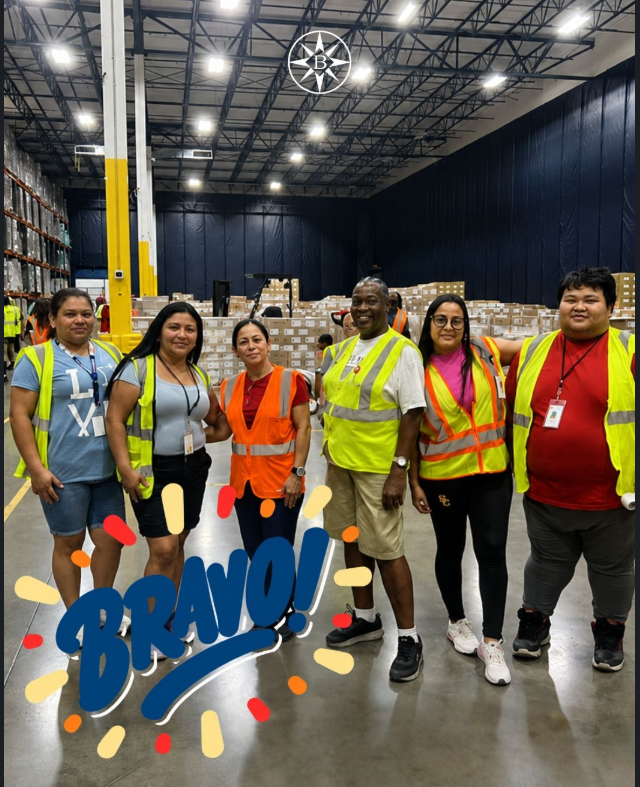
Earlier this year, Barrett introduced BRAVO, an employee recognition program built around a simple idea: appreciation shouldn't be reserved for annual reviews or major milestones.


The program encourages teammates to recognize one another in real time for demonstrating Barrett's core values, stepping up to help others, solving problems, or simply making a positive impact on the people around them.


While BRAVO is represented by a recognition card, it's really about something much bigger.


It's about creating an environment where people notice the good happening around them and take the time to acknowledge it.

Because when appreciation becomes part of the culture, recognition stops feeling like an event and starts becoming a habit.


Why It Matters Beyond Our Walls

Employee recognition is often viewed as an internal initiative, but its impact extends far beyond the people receiving the recognition. The way employees feel about their workplace inevitably influences the way they approach their work, their teammates, and ultimately the customers they serve.


When people feel appreciated, they're more likely to take ownership of the details that matter. They communicate openly, collaborate naturally, and step in when challenges arise because they know they're part of something bigger than themselves. That sense of pride can't be manufactured, it's cultivated over time through a culture where people feel seen, respected, and empowered to make a difference.


For our customers, those moments may never be visible, but their impact certainly is. It's reflected in the care that goes into preparing every order, the commitment to getting things right, and the teamwork that happens behind the scenes to deliver the level of service our customers have come to expect.


At Barrett, we believe exceptional customer experiences begin long before a package leaves the warehouse. They begin with people who care about the work they do, the teammates they work alongside, and the customers who depend on them. That's why recognizing those everyday contributions isn't just about celebrating our employees, it's about reinforcing the culture that helps us serve our customers better every single day.


Celebrating the People Behind Every Success

As I thought about what BRAVO represents, I realized it's about much more than recognition.


It's about paying attention.


It's about noticing the teammate who stayed late to lend a hand, the employee who found a better way to do something, or the person who made someone else's day just a little easier.


Those moments may seem ordinary in the moment, but over time they become the foundation of something much bigger.

They become culture.


At Barrett, BRAVO is one way we celebrate those everyday moments and the people behind them. Because while logistics is built on systems, strategy, and operational excellence, it's people who bring those things to life.


And that's always worth recognizing.


Looking for a 3PL that takes the time to understand your business?

Start a conversation with Barrett Distribution Centers.

Recent Blog Posts
By Faith Artieda • October 8, 2026
In logistics, problems rarely arrive at convenient moments. A shipment requires clarification, an order needs attention, or a customer discovers an inconsistency that cannot afford to linger. What follows often reveals more about a third-party logistics provider than months of uninterrupted fulfillment. The characterization is not necessarily whether something goes wrong. Even experienced operations encounter unexpected circumstances. What separates a dependable fulfillment partner from a frustrating one is the willingness to assume responsibility when an issue surfaces. At Barrett Distribution Centers, that philosophy has a name: One Call Resolution. Accountability Should Not Require a Follow-Up Few experiences erode confidence faster than repeatedly explaining the same problem to different people. An initial inquiry becomes another email, another conversation, and eventually another responsibility competing for the customer's attention. For brands entrusting their inventory and customer relationships to a 3PL, those exchanges carry consequences beyond inconvenience. Every unresolved concern consumes time that could otherwise be devoted to merchandising, product development, or pursuing the next opportunity. Adam Robertson , Barrett's Vice President of Customer Experience, describes a fundamentally different expectation. “When a customer reaches out to us, they only need to reach out once and they know we will own the issue.” The concept does not promise that every situation will be resolved immediately. Some matters require investigation, coordination, or additional communication. Instead, One Call Resolution establishes something more enduring: once Barrett receives a concern, the responsibility for pursuing a resolution belongs to Barrett. Customers should participate in resolving important issues without having to become the people managing the resolution itself. Service Is a Company-Wide Responsibility Although customer experience is frequently associated with account managers and support representatives, fulfillment performance depends on people throughout the organization. A warehouse associate identifying an inventory discrepancy, a supervisor responding to an unexpected request, or a technology specialist investigating an integration concern can all influence the quality of a customer's experience. Recognizing that interconnected responsibility, Barrett has trained more than 200 employees in its One Call Resolution philosophy, extending the principle beyond customer-facing positions. Robertson emphasizes the importance of making customers feel that Barrett is “not only responsive, but we're extremely accountable.” Responsiveness initiates the conversation. Accountability determines what happens afterward. A prompt acknowledgment has limited value when the underlying concern remains unresolved. Meaningful service requires someone to carry the issue forward, coordinate the necessary resources, and remain engaged until there is a satisfactory outcome. Listening Is Only Valuable When Something Changes An organization can sincerely welcome customer feedback and still fail to act on it. Surveys may produce impressive reports, while recurring frustrations quietly persist. Barrett approaches feedback as an ongoing responsibility rather than an occasional measurement exercise. According to Robertson, the company conducts customer surveys twice annually and reviews the findings across its management and operational teams. Critical feedback becomes a documented case that remains open until the identified concern has been addressed.  If a customer requests improved reporting, for example, that feedback is not simply recorded as an observation. It becomes an item requiring follow-through. This approach reflects a broader understanding of customer relationships. Expectations change as brands introduce products, expand distribution channels, and encounter new demands. A fulfillment partner must be prepared to listen carefully and respond constructively as those needs develop. The Relationship Is Tested When Something Goes Wrong Reliable fulfillment will always depend on accuracy, consistency, and sound execution. Yet the strength of a partnership also emerges in less predictable circumstances, particularly when a customer needs assistance and cannot afford to spend the day searching for answers. For brands evaluating a 3PL, service deserves the same scrutiny as warehouse capacity, technology, and pricing. An impressive distribution network matters, but so does knowing that the people responsible for your operation will remain accountable when circumstances become complicated. Ultimately, the measure of customer service is not how confidently a company promises support. It is how consistently that promise translates into action. A good 3PL answers your call. A great fulfillment partner makes sure you do not have to keep calling about the same problem. Looking for a 3PL that takes the time to understand your business? Start a conversation with Barrett Distribution Centers.
By Faith Artieda • October 7, 2026
By the time your inventory reaches the Port of Baltimore, it has already completed a considerable journey. But for the brand waiting on those products, arrival at the port is hardly the finish line. The merchandise still needs to clear the next stage of its journey, reach a warehouse, become available for distribution, and ultimately find its way to a retailer or customer's doorstep. When those steps involve unnecessary distance or too many handoffs, an exciting arrival can quickly become another source of complexity. For brands importing through Baltimore, the location of the warehouse deserves a closer look. Keep the Next Step Close When your inventory finally reaches the Port of Baltimore, you want the next step to feel like progress, not another logistical hurdle. Barrett Distribution Centers' Curtis Bay facility is located within 10 miles of the port, creating a natural transition from international transportation into domestic fulfillment. Rather than viewing Baltimore simply as the place where products enter the country, brands can use it as the starting point for what comes next, whether that means preparing inventory for retail, fulfilling ecommerce demand, or moving products farther into their distribution network. For Horseware, an Irish equestrian brand working with Barrett for its United States fulfillment, that location carried real significance. “Barrett’s strategic Mid-Atlantic warehouse location, near the Port of Baltimore, is pivotal for us,” said Conor Farrelly, Logistics Manager at Horseware. Horseware's decision was not based on proximity alone. Barrett's experience supporting retail, business to business, and ecommerce fulfillment also mattered because imported inventory rarely has only one destination. Your Inventory Arrived. Now What? Picture a container filled with products arriving in Baltimore. Inside, some of that inventory may eventually be purchased by an ecommerce customer. Another portion could be destined for a retailer. Certain products may require labeling, pre ticketing, palletization, cross docking, or other preparation before they are ready to continue moving. Suddenly, the warehouse is doing much more than providing square footage. That is where the conversation around port proximity becomes more interesting. Barrett's Baltimore operation can support ecommerce fulfillment, retail distribution, omnichannel operations, and value added services, giving brands the ability to move inventory from international arrival toward the channels where it will actually generate demand. For a growing brand, that versatility matters. Sales strategies evolve, retailer opportunities emerge, and a business that once relied predominantly on one channel can gradually become far more complex. The warehouse receiving imported inventory should not become the obstacle standing between today's operation and tomorrow's opportunity. Look Beyond the Distance on the Map It is easy to evaluate port warehousing by mileage alone. Certainly, distance matters, but a nearby building is only useful if the operation inside it can support the business waiting on the other side. A more revealing question is: What can happen to our inventory once it gets there? Does the location make sense not only for receiving products, but also for moving them toward the markets and customers they ultimately need to reach? Those questions transform warehouse selection from a real estate decision into a broader fulfillment decision.  For brands importing through the Port of Baltimore, proximity can create a valuable beginning. What ultimately matters, however, is where the operation allows the brand to go from there. Your products have already traveled a long way to reach Baltimore. The right warehouse should help make the rest of their journey count. Looking for a 3PL that takes the time to understand your business? Start a conversation with Barrett Distribution Centers.
By Faith Artieda • October 6, 2026
Holiday volume rarely arrives politely. It does not wait for receiving to quiet down, retail orders to clear, or every incoming shipment to find its place. Customers simply begin buying. Promotions launch, popular products accelerate, retailer requirements continue, and inventory keeps entering the building while orders are moving out at an entirely different pace. For an omnichannel brand, that is what makes peak season particularly demanding. The challenge is not merely fulfilling more ecommerce orders. It is sustaining the rest of the business while one part of it becomes considerably busier. Peak Does Not Replace Your Normal Business A holiday forecast might predict a significant increase in direct to consumer orders, but those orders do not exist in isolation. Business to business shipments still need attention. Retail commitments remain. Inventory must be received. Special projects may continue. Personalized orders can require additional touches at precisely the moment speed becomes increasingly important. Harrison Smith , Director of Commercial Revenue at Barrett Distribution Centers, emphasizes the importance of examining these patterns rather than relying on broad annual averages. “It’s looking at yearly trends, looking at within the year, what does that look like? Do you have those peaks?” Understanding the peak is important. Understanding everything happening around the peak is equally consequential. A brand could finish the year with an average of 5,000 monthly orders, for example, while experiencing dramatically different volumes from one month to another. Once promotions, seasonal inventory, retail activity, and multiple sales channels enter the equation, the average begins to conceal more than it reveals. As Harrison explains, “When I work with brands, I wanna understand everything about the business.” That broader perspective gives a fulfillment partner context. It helps explain not simply how much work is coming, but when it is coming, where it is coming from, and what else the operation will be responsible for at the same time. Omnichannel Growth Changes the Peak Season Equation A growing brand may begin with a relatively straightforward direct to consumer model. Success often introduces something more complicated. Retail opportunities emerge. Business to business volume grows. Marketplaces become relevant. New products require different handling. Suddenly, fulfillment is no longer about moving one type of order through one channel. Scott Wilkins has spoken about this progression throughout his years working with Barrett customers. One of the advantages of building an operation capable of supporting multiple channels is that a brand does not have to reinvent its fulfillment strategy every time a new opportunity appears. That experience becomes especially valuable during peak because each channel brings its own requirements. A direct to consumer order and a major retailer order may contain the same product, but they are not necessarily the same fulfillment task. Without the right experience behind the operation, Scott cautions that “brands can get into trouble really, really quickly.” During the busiest months of the year, there is considerably less room for that learning curve. Your 3PL Needs More Than a Forecast Forecasts provide a starting point, but numbers become far more useful when brands explain what is driving them. If marketing is preparing a major promotion, tell your fulfillment partner. If a retailer order is expected during an already busy week, communicate it early. If inventory is arriving later than planned or a particular product is suddenly outperforming expectations, that information belongs in the conversation too. This is where a strong 3PL relationship becomes less transactional. Bryan Corbett at Barrett has described the relationship between brands and their fulfillment partners as one built on expertise, honesty, and trust. His perspective is refreshingly practical: “Sometimes the customer's not always right. And sometimes Barrett's not always right. Sometimes we make mistakes.” Peak season does not eliminate those realities. If anything, increased volume magnifies them. Plans change. Forecasts miss. Unexpected problems emerge. The strength of the operation becomes visible in how people respond. As Bryan puts it, “You show your expertise through your honesty and your trustworthiness. You can’t separate the two.” Growth Should Create Opportunity, Not Fragility The ultimate objective of peak planning is not to construct a perfectly predictable holiday season. That would be unrealistic. It is to build enough visibility, communication, and flexibility into the operation that success does not destabilize everything surrounding it. Your holiday promotion should be allowed to outperform expectations. A retailer opportunity should feel exciting. A sudden surge in demand should represent momentum rather than an immediate operational crisis. That requires a fulfillment partner capable of seeing the entire business, not simply the orders accumulating in one queue. Because when holiday volume accelerates, the rest of your business does not disappear. It keeps moving, and your 3PL needs to be prepared to move with it. Looking for a 3PL that takes the time to understand your business?  Start a conversation with Barrett Distribution Centers.
More Posts